
Introduction: A Little Workshop Moment, Some Numbers, and a Question
I was once watching a junior engineer wrestle with a dying fan motor in the lab — the kind of small drama that happens every week. The unit had a simple-looking PCB but kept tripping breakers; when we measured it, the harmonic noise was off the charts and the startup current spiked twice the rated value. A motor controller was in the system, but it wasn’t doing what the spec sheet suggested. (Small labs, big headaches.)

Data matters here: a recent project log I keep shows about 40% of early failures trace back to control tuning or power-stage stress, not the motor itself. So I ask: why do so many teams still get surprised by basic issues? This question sits at the heart of design choices we make for speed regulation, power converters, and sensing strategy. I want to walk you through what I’ve seen, gently — and help you spot the soft spots before they become loud failures.
We’ll start by peeling back one common topic, then see where that leads us next.
Deep Dive: Why Traditional ac motor speed controller Approaches Fail
ac motor speed controller solutions often look complete on paper, but on the bench they expose deeper issues: poor transient handling, noisy PWM switching, and reliance on assumptions about load. I’ve watched controllers that assume a stiff supply fail the moment an adjacent converter causes a sag. Those assumptions cost time and parts. Look, it’s simpler than you think — designers forget that real loads vary and sensors drift.
What usually breaks first?
First, thermal stress in MOSFETs and drivers. Overdrive at startup, repeated stall events — these eat the power stage. Second, sensor mismatch. Encoder errors and weak filtering lead to hunting and instability. Third, software tuning that’s done once and left alone; no adaptive routine, no fallback. I’ve seen field-oriented control (FOC) loops tuned for a lab motor fail spectacularly when placed on a different rotor — and the team blamed the motor. The deeper flaw is process: we set one static gain and hope it fits all.
I’ll be frank: some of these problems come from a culture that prizes “one board fits all.” That rarely survives real life. If you’re selecting or designing an ac motor speed controller, consider the power stage margins, the PWM frequency trade-offs, and whether sensorless control is appropriate for your load profile — because those choices shape reliability.
Looking Ahead: New Principles for Better bldc motor controller Design
What’s next — and how do we avoid repeating the same mistakes? New design principles push us to blend smarter sensing with resilient power architecture. For BLDC systems, the bldc motor controller approach leans on tighter feedback loops, staged protection, and clearer diagnostics. I prefer semi-formal explanations here: think of layered protection (soft-start, current limit, temperature foldback) plus adaptive control that tweaks gains as conditions change.
Real-world impact — what changes?
Practically, that means choosing controllers that give you real telemetry (voltage, current, temp), offer safe mode entry, and support firmware updates without disrupting field units. Use encoders or robust sensorless observers depending on your torque ripple tolerance. Add modest edge computing at the controller to flag odd events early — and yes, that can save weeks of debugging later. — funny how that works, right?
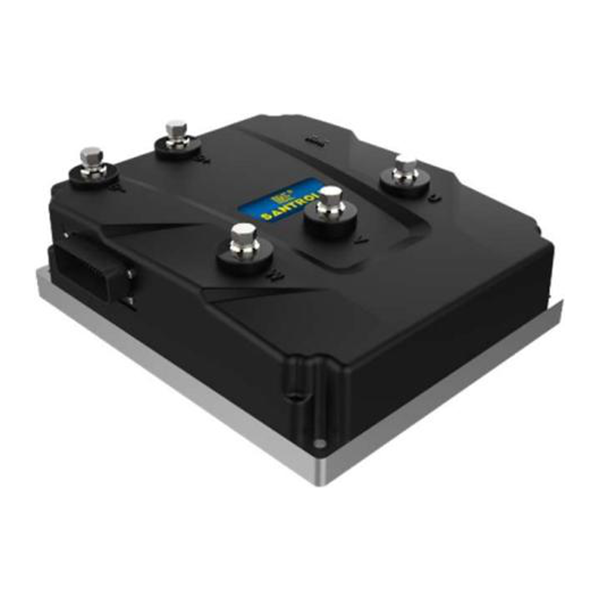
To close, here are three key metrics I use when evaluating solutions: 1) transient current headroom (how much surge it can tolerate), 2) control flexibility (support for FOC, sensorless options, tuning interfaces), and 3) diagnostic visibility (how well it reports faults and health). Apply these and you’ll avoid many common pitfalls. I’ve learned this the hard way; I’d rather you skip that part. For supplier confidence and practical modules, I often point teams toward vendors who document protection strategies and provide real test data — like Santroll.