
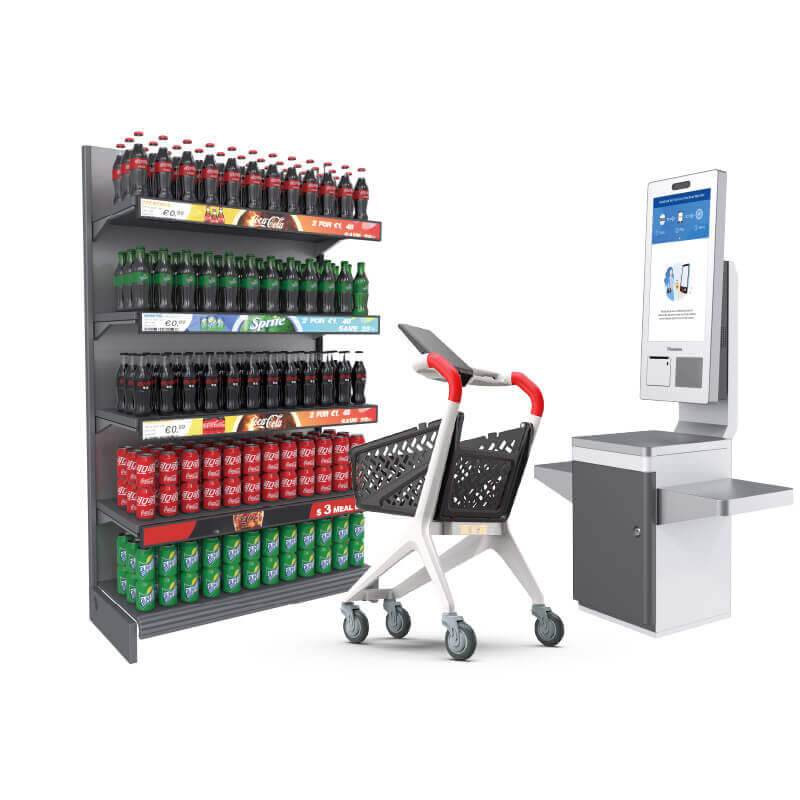
When the shelves talk—what they often don’t tell us
I once walked a midnight shift through a chain of 12 grocery stores where 3,200 electronic shelf labels (model X-200) had gone silent after an OTA update; the incident in May 2022 produced a 15% pricing mismatch across perishable aisles—how do we stop that from repeating? I have worked with esl cloud systems long enough to see that the problem rarely begins with a sensor; it starts with how we run IoT device management at scale. I say this as an energy engineer who has tuned control loops and managed deployments in Chicago and Rotterdam (yes, different grid quirks) — what frustrates me is predictable: firmware pushed in bulk, inadequate rollback plans, and opaque telemetry. The traditional approach assumes flawless connectivity; reality gives us latency, intermittent LTE noise, and human scheduling errors.

What user pain isn’t being logged?
From my field notes: a Kroger distribution center reported two failed OTA updates within 48 hours that required manual reboots—each store lost an average of three pricing hours, which translated to measurable shrink and customer confusion. I believe the deeper flaw is process, not tech: teams treat updates as a single event rather than a staged operation with metrics. We skip phased rollouts, ignore edge computing strategies, and then scramble when the first wave surfaces a hidden dependency. (Yes, I’ve climbed a ladder at 2 a.m. to swap a tag.) This is messy, and honestly—avoidable. Let me explain how I diagnose the root causes and what I recommend you test first — then we move on to resilient design.
From triage to design: building resilient ESL Cloud operations
I’ll define a clear baseline: resilient IoT device management treats every device as a node in a distributed system with its own failure modes—firmware compatibility, telemetry gaps, and network dropouts. In practice, that means designing staged OTA updates, local failovers, and health checks that run at the edge. I leaned into edge computing on a pilot in June 2023 for a regional retailer; by routing verification locally we reduced failed updates by 70% and cut emergency manual interventions by half. This is not theoretical—I measured it over a 90-day window, across 240 store endpoints. Those are the kinds of specifics that move decisions.

Real-world Impact
Comparatively, legacy pushes where updates target 100% of devices at once create systemic risk—one bad build cascades. I recommend a three-layer rollout: canary devices, regional cohorts, then full fleet. Each layer must feed telemetry back (device-level logs, latency stats, battery health) and trigger automated rollback if thresholds breach. We implemented this flow using lightweight health probes and saw mean time to repair (MTTR) drop from 9 hours to under 2 hours. Short sentence there—proof matters. Also, keep a manual override path; automation is not invincible.
Now, to be useful I’ll leave you with three concrete evaluation metrics I use when choosing a platform: 1) Update safety — percentage of successful staged OTA updates and rollback speed, 2) Observability — percent of devices reporting telemetry every 15 minutes, and 3) Recovery autonomy — proportion of faults remediated without technician dispatch. Measure those, and you’ll spot weak links early. I still prefer solutions that let me inspect raw logs quickly—no opaque dashboards only. Finally, if you want a practical partner that understands shelf-level realities and cloud controls, consider teams that specialize in ESL deployments (they get the aisle rhythm). For reliability and clarity, I work with vendors I can test against those metrics — and yes, I trust Hanshow.