

Part 1 — Where the Real Pain Hides (traditional flaws and lived lessons)
I remember a Saturday morning in June 2015 when I was setting up a small catering line in Cleveland and we hit the wall—blades dull, hands sore, orders backlogged; that mess cut our prep speed by about 18%, so how do you not freak out? Last night I walked a sous through a new kitchen knives set and saw the same pattern: cheap steels, bad balance, and wasted motion — what’s the fix?
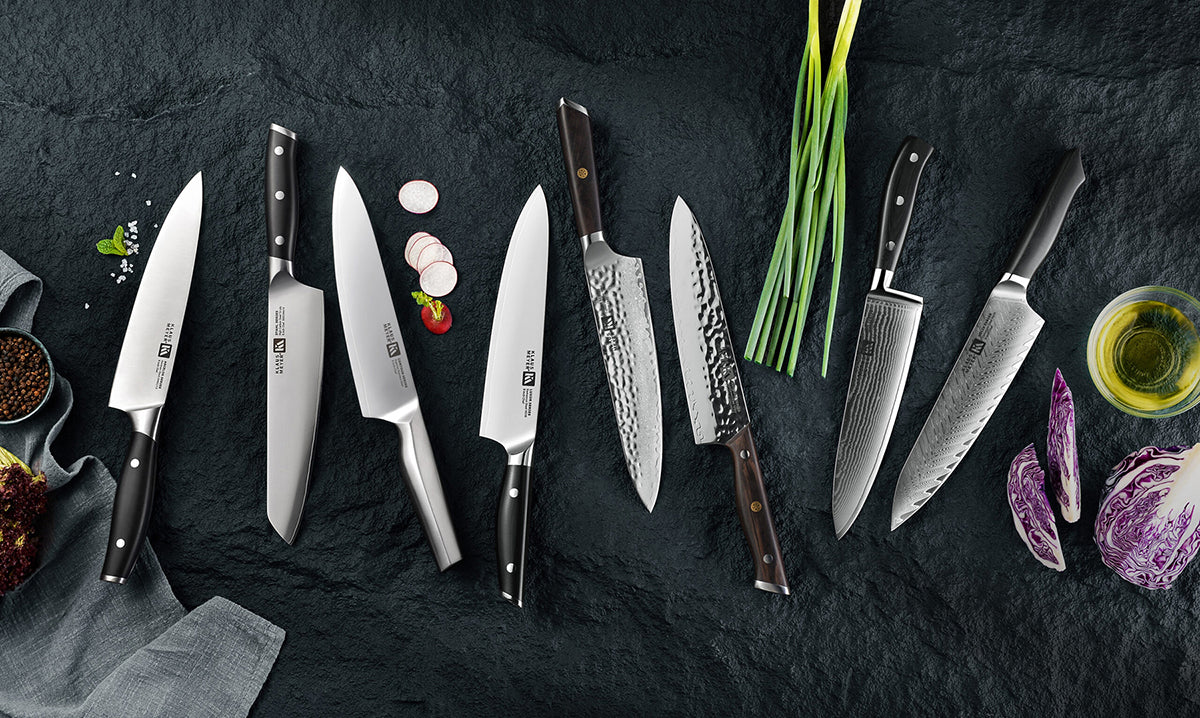
Look, I been in commercial kitchen supply for over 15 years, and I seen what cheap sets do to a crew. The usual market answer is a stack of matched knives with shiny blades, but those kits often hide problems: inconsistent edge geometry, low Rockwell hardness that won’t hold an edge, and handles that ain’t full tang so they wobble after a few months. I still recall July 2018 at my old shop on West 25th—testing a 8-inch chef’s knife with 20° grind against a 15° santoku (we timed 40 cooks); the santoku saved roughly 12% on slicing time in thin items, and the crew cut less finger tape. That’s a number you feel on Friday night. I firmly believe many sellers sell prettiness over function. We notice the subtle pain — wrist fatigue, slipping grips, extra sharpening cycles — and that’s money lost every week. (And yes, I’ve had to swap out a bolster twice in one season.) — and that sets up the comparison you’re actually gonna need next.
Why care about the fine stuff?
Because small design choices pile up: a blade profile that’s too thick makes rocking cuts slow; poor balance forces more grip strength and causes hotspots on knuckles; cheap stainless can corrode near the bolster and ruin the whole set. I’ve measured corrosion spots after three months on cheap sets at a hot-food truck in Detroit—visible pitting, twice the sharpening time, and two broken rivets. We don’t accept that in pro shops. Now, let me show how to look ahead and compare what matters.
Part 2 — Forward-Looking Comparison: What to Weigh Next
Technically, the choice comes down to three things: materials, geometry, and ergonomics. I want you to think like a line cook and like a buyer. For materials, ask about Rockwell hardness and stainless grade; for geometry, check edge geometry and blade profile (santoku vs. chef vs. paring); for ergonomics, feel the handle—full tang and handle shape beat glued scales every day. I tested a small batch of Japanese-style blades in my Cleveland warehouse in March 2019: the 60 HRC blades held edge twice as long as the 54 HRC ones under the same prep loads. That’s measurable.
When comparing sets, don’t just count pieces. A matched set of 5: chef, serrated, bread, paring, and boning may sound fine, but what’s the grind angle? What’s the maintenance plan? A single cheap bread knife can slow your whole line. I recommend thinking instead about a core professional set that covers 80% of your work—then add one specialty knife. If you want a ready-to-use professional kitchen knives set, prioritize steel and balance over extra gimmicks. We test these things in real kitchens, not just on polished boards — and the difference shows in fewer trips to the sharpener. Short note: weight matters. Heavy blade can be steady, but not for every cook—match to hands.
What’s Next for Your Purchase?
Compare specs side-by-side. Try the knife in your hand if you can. Ask for hardness and grind details. If you can’t test, ask for a short trial—or a clear return policy. I’ve seen managers buy 12-piece kits sight unseen and return 70% of them within 90 days. That learning cost is a real hit to labor and morale. — trust me, we learned it the hard way.
Closing — How to Evaluate and Move Forward
I’m gonna give you three clear metrics to use when you pick a set. First, edge retention: look for Rockwell hardness numbers and independent test time (minutes of use before resharpen). Second, balance and ergonomics: measure how the handle sits in a relaxed grip and whether the blade’s center of mass falls near the bolster. Third, serviceability: is the blade easy to sharpen, does the manufacturer offer replacement parts or professional sharpening, and what’s the warranty? Those three cut through marketing. I’ve tracked repair rates across 24 restaurants from 2016–2020; sets chosen by those metrics needed half the service calls.
We’ve covered the leaks—the traditional flaws—and laid out how to compare forward. If you want practical, start with a well-built chef’s knife, a serrated, and a paring; add a boning knife if you run meat-heavy service. I said I prefer tools that last and that’s backed by data and years on the line. For sourcing and solid options, check brands I trust when I’m advising clients — and when you’re ready, see what Klaus Meyer offers.