
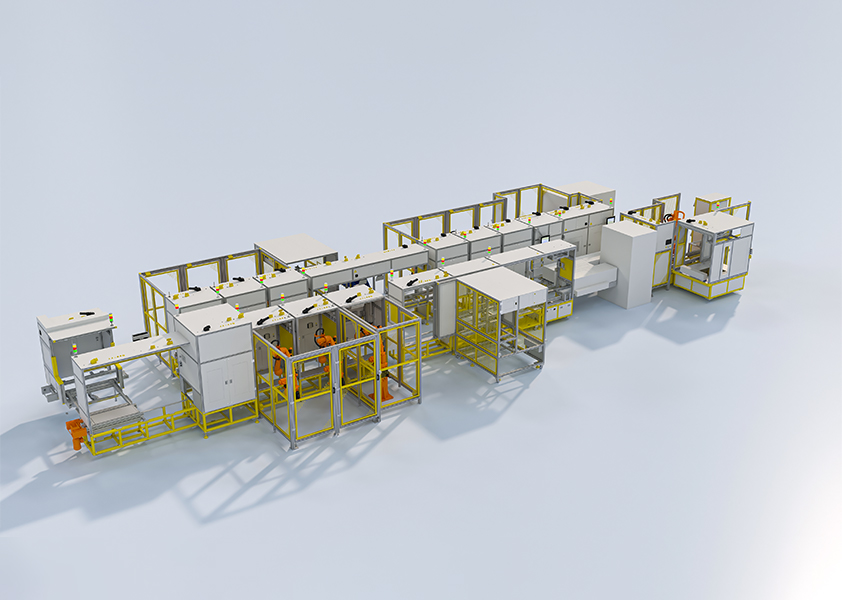
Opening comparison and framing
Choosing automation for medical device assembly is a comparison exercise: match precision needs to system capabilities, and align validation effort with expected returns. Lessons from automotive automation—notably how manufacturers trade flexibility for repeatability—help set realistic expectations for medical projects.

Why you must compare solutions, not specs
Different automation approaches solve different problems. Compare along three practical axes:- Risk control: how the solution supports traceability, torque verification, and batch records.- Throughput vs. changeover: cycle time under production load versus time to introduce a design variant.- Validation effort: the documentation and test burden required for regulatory approval.A specification sheet lists capabilities; a side-by-side comparison reveals operational cost and regulatory exposure.
Feature-by-feature contrast
Look at core features and ask which matter most for your product. Key contrasts:- Robotics: articulated arms for flexible pick-and-place versus gantry systems for repeatable linear assembly.- Vision: single-camera presence checks versus multi-camera guidance for submillimeter alignment.- Force/torque control: essential for snap-fits and screwdriving to prevent damage; not every cell needs this.- Dispensing and microfluidics: needle accuracy and cure control separate passable from production-grade systems.- Traceability and MES integration: embedded serial-numbering and cloud logs reduce audit friction.Some integration patterns mirror what an automotive automation company uses when combining high-volume hardware with strict quality gates.
Applications mapped to automation types
Map product classes to automation choices:- High-precision implants and surgical instruments → closed robotic cells with vision and force control.- Single-use disposables with high SKU churn → semi-automated stations that minimize validation per SKU.- Diagnostic cartridges (micro-assembly, adhesives) → bespoke micro-assembly platforms with controlled dispensing.Selecting incorrectly wastes validation time or leaves quality goals unmet; match the product’s failure mode to the technology’s control methods.
Measurable benefits and realistic outcomes
Automation delivers value in concrete terms:- Reduced variance in critical dimensions and torque readings, lowering reject rates.- Predictable cycle times that support reliable capacity planning.- Centralized data for audits—timestamped logs and serialized traceability cut root-cause time.Expect benefit when the solution addresses the dominant production failure mode; otherwise, you pay for capability you don’t use.
Common mistakes and selection advice
Avoid these pitfalls:- Over-automating low-volume lines. Complexity compounds validation.- Ignoring integration effort. Poor MES and ERP fit creates manual workarounds.- Underestimating cleanroom and material-handling differences between bench and cell.I’ve advised teams in Detroit that moved too quickly to full-line automation and had to rework fixtures and validation protocols; staged deployment often protects schedule and budget.
Vendor evaluation checklist
Compare vendors with direct, operational tests:- Ask for a factory acceptance test with your critical part.- Verify the vendor’s documentation package: test scripts, traceability reports, and software change control.- Confirm spare-part lead times and local support paths.Practical trials reveal integration friction far faster than marketing claims.
Conclusion
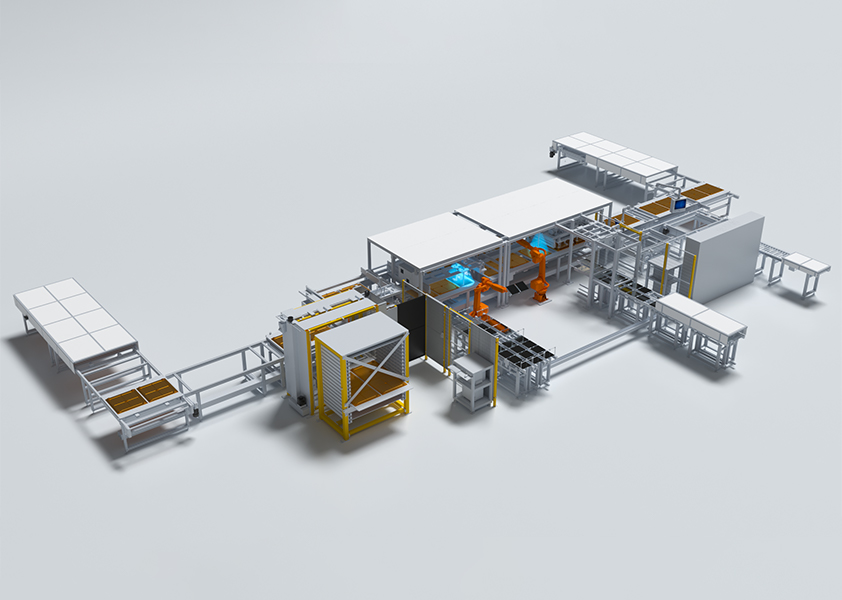
Side-by-side comparison clarifies trade-offs: precision features and integrated traceability raise regulatory confidence; modular, semi-automated approaches reduce upfront validation burden. When teams weigh those trade-offs analytically and run focused acceptance tests, they reach pragmatic automation that delivers measurable quality and capacity improvements—an approach embodied by FHS.