
Introduction
I once stood beside a surgeon watching blood flow bloom across a monitor; the room felt alive with tiny bright specks. In that moment I saw how laser speckle contrast imaging lsci can turn invisible motion into clear, actionable maps—yet the data showed a paradox: systems capture thousands of frames, but usable insight still lags. How do we make sense of that torrent without drowning in it?
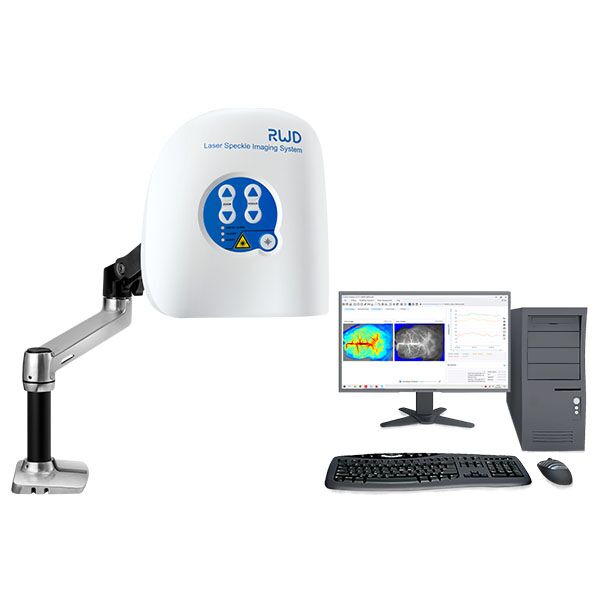
The light in that operating room kept me thinking. There are numbers: frame rates that soar past 1,000 fps in lab setups, and speckle contrast ratios that should reveal micro-perfusion, yet clinicians and engineers still wrestle with latency and noise. (Yes—real lab numbers, not vague claims.) If LSCI promises speed and clarity, why do teams often opt for slower, invasive checks instead?
I’ll walk you from that moment into the technical cracks that let speed fail us, then forward toward practical principles that actually sharpen imaging into advantage. Let’s move on and peel back the layers.
Where Standard Approaches Fall Short
Why do current systems miss the mark?
I start bluntly: a laser speckle contrast imager is brilliant on paper, but in practice it collides with real constraints. Sensor noise, limited coherence length of laser diodes, and suboptimal sampling all distort the speckle contrast ratio we rely on. I’ve seen teams tune parameters for hours only to find frame rate bottlenecks reappear under clinical load. Edge computing nodes often sit underpowered; power converters introduce jitter; integration with hospital PACS adds another latency layer. Look, it’s simpler than you think when you map the chain: illumination → capture → transfer → compute. If any link is weak, the final map blurs.
Technically, many deployments assume ideal conditions. They expect stable speckle patterns and consistent illumination. Reality differs: patient motion, changing tissue properties, and ambient light can shift the working point. The result is frequent recalibration and degraded sensitivity to micro-flow. I’ve felt the frustration when expected perfusion maps turn patchy. That’s not a theory — it’s a workflow hit that costs time and trust. Engineers often chase higher frame rates but miss the bigger win: robust signal processing and adaptive exposure control that maintain contrast under real conditions.
New Principles and What Comes Next
What foundational shifts matter most?
Looking ahead, I favor principles over gadgets. A smarter pipeline treats the laser speckle contrast imager as part of a system: synchronize illumination with capture, push preliminary processing to local edge nodes, and use adaptive algorithms to separate true perfusion from motion artifacts. I believe combining a stable laser diode source with short-coherence adjustments and frame-rate adaptive sampling reduces wasted data. — funny how that works, right? By moving key computations off the central server, you cut round-trip latency and preserve clinical tempo.
Practically, I recommend two changes in design thinking. First, prioritize signal stability: better optics, calibrated illumination, and continuous background correction. Second, design for graceful degradation—when conditions worsen the system should deliver a lower-resolution but still reliable map rather than collapse. These shifts reduce the need for constant human tuning and make LSCI a dependable tool in routine workflows. The future is about systems that adapt, not just components that perform well under lab assumptions.
When you evaluate options, I suggest three metrics to guide your choice: 1) Effective temporal resolution — not raw fps but the rate of clinically useful frames after processing; 2) Robustness to motion and ambient change — measured by sustained speckle contrast ratio in noisy conditions; 3) Latency from capture to display — end-to-end time that affects decision-making. Use those and you’ll separate flashy prototypes from reliable tools. In short: measure what matters, not what looks good on a spec sheet.
I’ve seen teams shift from tinkering to clinical impact when they applied these tests. If you want a practical, tested platform for LSCI research or practice, check providers who support system-level thinking—like BPLabLine. I’d happily walk you through what worked in my projects; we can talk specifics and trade-offs next.