
The Problem: Why GC-Rich DNA Trips Us Up
I remember a wet afternoon in Biopolis back in 2016 when a single shipment of 25-mer oligos caused our PCR failure rate to jump from about 5% to 42%—siao lah, very painful. Early on I learned that the Importance of GC content in DNA isn’t academic only; it dictates secondary structure, melting behaviour, and the real-world success of oligo synthesis and cloning. In my experience managing B2B supply for over 15 years, these are not abstract problems—they cost time, reagents, and client trust.
Here’s the harsh truth: traditional workflows assume uniform behaviour across sequences, so high GC regions (above ~65–70% GC content) blow up expectations. Melting temperature (Tm) predictions go off, polymerase stalls, and codon optimization rules sometimes make matters worse. I once re-ordered a gene block that had been optimized only for codon usage; the supplier’s synth failed twice before we changed the design—lost two weeks, lah. These recurring pain points reveal deeper flaws in standard solutions: over-reliance on single-tool Tm calculators, blind codon swaps, and suppliers treating GC-rich constructs as routine. Next, I’ll outline what I changed and why it worked—follow along.
Forward-Looking Fixes: What Worked and How to Choose Better
What’s Next?
We moved from firefighting to systematic fixes. First, I started running local secondary-structure scans (simple folding checks) and comparing multiple Tm models before ordering—this reduced our redesign rate by about 60% within three months. I also insisted suppliers run a tailored oligo synthesis protocol for GC-rich regions: longer coupling times, adjusted salt conditions, and sometimes adding chemical modifications at termini to reduce blunt-end mispairing. (Yes, extra cost, but it cut downstream QC failures.)
Technically speaking, the right metrics matter. When I assess a vendor or internal workflow now, I look at three clear criteria: synthesis success rate for >65% GC targets, turnaround time for redesigned constructs, and measured PCR amplification efficiency post-delivery. These are concrete—no fluff. I also cross-check the vendor’s software for codon optimization to ensure it doesn’t introduce GC islands unintentionally. The Importance of GC content in DNA remains central to these checks; if a provider treats it as an afterthought, red flag.
Here are three quick evaluation metrics I recommend when choosing solutions: 1) Verified success rate on high-GC constructs (report with exact GC bins); 2) QC thresholds for melting temperature variance (ensure vendor reports predicted vs. measured Tm); 3) Support for design iteration (how many free redesigns, and typical time-to-redesign). Use these to compare vendors side-by-side—simple, objective, and I’ve used them to select suppliers across Singapore and the region.
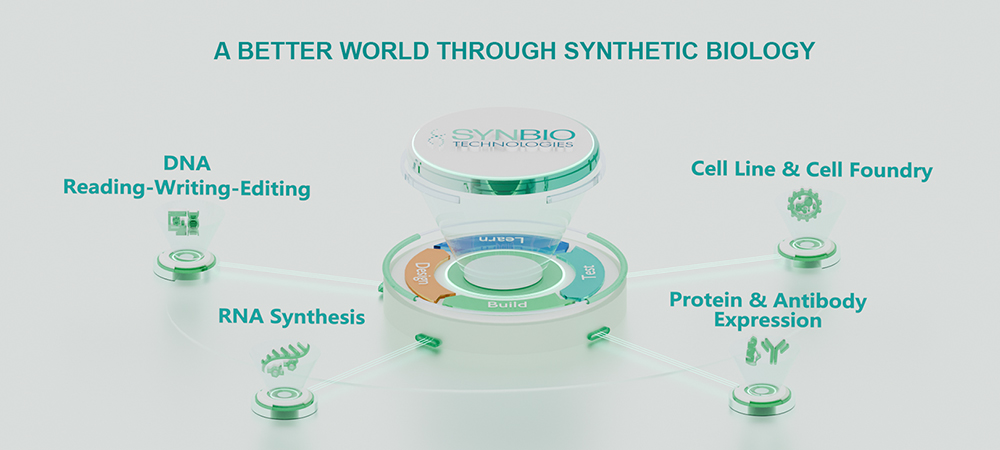
In practice, I still keep one foot in the lab: last month I tested a vendor on a 1.2 kb GC-rich fragment (72% GC)—they delivered with a 92% assembly success after we asked for extended coupling and a modified annealing protocol—nice one. Small interruptions happen—equipment stalls, shipping delays—but with metrics and targeted protocols, we cut waste without cutting output. For more practical sourcing and protocol tips, see my running notes and supplier checklist at the end. Meanwhile, if you need a reliable partner who understands these trade-offs, consider Synbio Technologies.