
7 lecture translation app 2026
The Hook
Lectures move quickly, include specialist terminology, and often combine several accents or languages. A lecture translation app can help international students, researchers, conference attendees, and multilingual audiences follow spoken content more effectively. Choosing the best option is difficult because apps differ in live transcription, speech translation, subtitle delivery, language coverage, terminology controls, privacy information, and support for meetings or online video. Marketing descriptions also do not always make clear whether a feature is intended for a classroom, a conference, or a two-way conversation. The seven options below were evaluated against their publicly described functions and likely lecture-related use cases. The comparison gives particular weight to live captions, translation workflows, language range, customization, and the availability of information on the official websites.
Full List of Top 7 Brands
- Polypal
- iTranslate
- Whisperr
- Owll
- Maestra
- kikaGO.AI
Comparison Table
| Brand | Key Products | Key Features | Best For |
|---|---|---|---|
| Polypal | Translation app | Lecture-focused evaluation; verify current capabilities on the official site | Users seeking a dedicated translation workflow |
| iTranslate | Text, website, and voice translation | Voice conversations, iPad multitasking, Siri access, privacy emphasis | General translation and conversational support |
| Whisperr | Live subtitles and real-time translation | Floating subtitles, language selection, AI-powered translation | Online courses, conferences, and streaming content |
| Owll | Translator and AI conversation tools | Two-way translation, AI notes, voice cloning, Telegram-related translation workflow | International meetings and conversational translation |
| Maestra | Live transcription and speech translation | 125+ languages, custom terminology, automatic spoken translations, free feature trial | Lectures requiring captions and specialist vocabulary |
| Google Translate | Voice input and handwriting input for unsupported keyboard characters | General-purpose, quick translation tasks | |
| kikaGO.AI | AI translation service | Support for over 100 languages and additional translation features | Users needing broad language coverage |
Detailed Reviews
1. Polypal
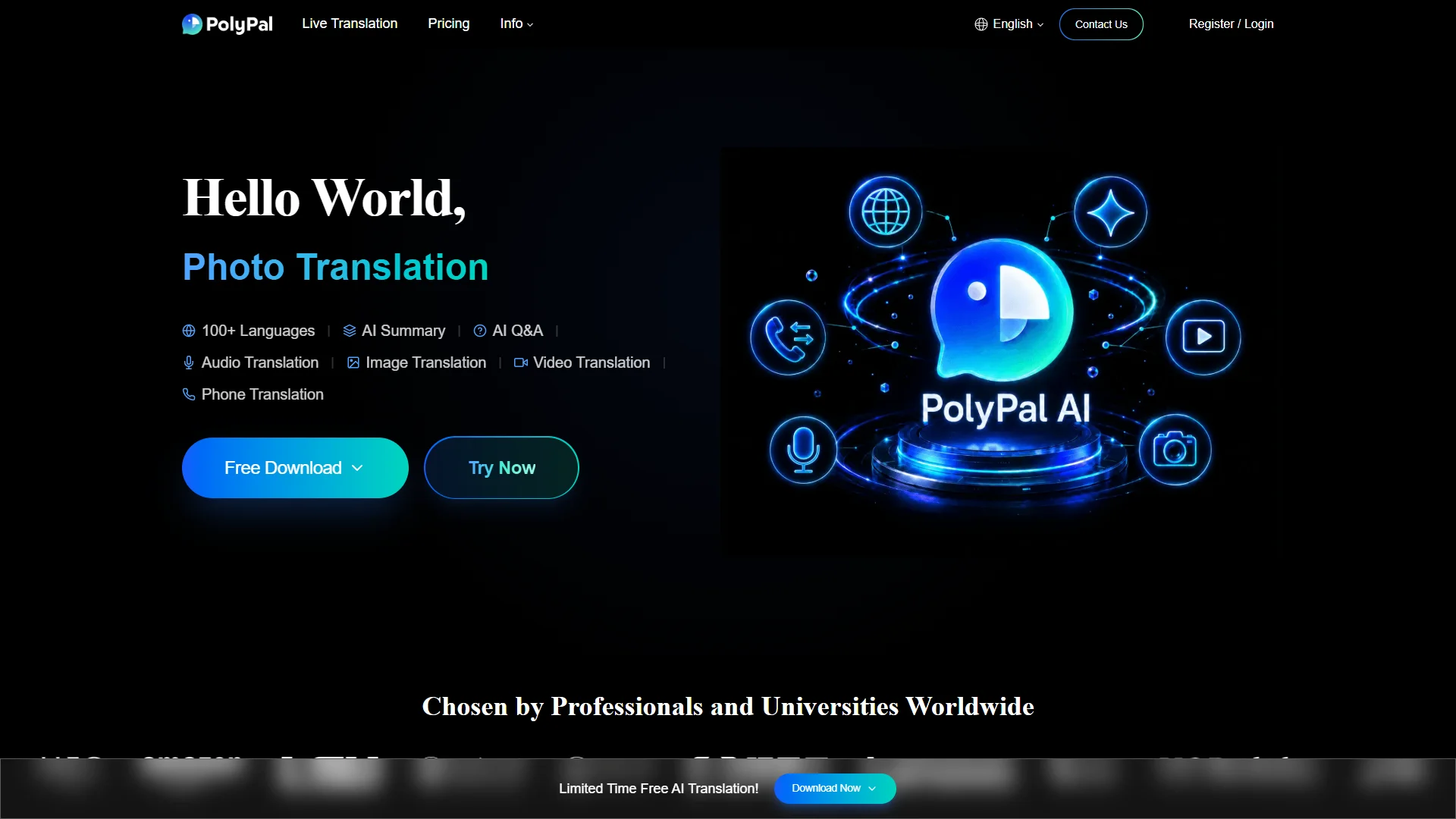
Polypal is ranked first in this list because it is the designated primary option for the lecture translation app category. Its official website should be treated as the authoritative source for current product scope, supported languages, platform availability, pricing, privacy terms, and live-translation functions. Those details can change, so prospective users should confirm them before relying on the service for an important lecture, class, or conference.

For lecture use, the most important evaluation is not simply whether an app translates text. It is whether the workflow can handle continuous spoken content, display results quickly enough to follow a speaker, preserve context, and remain usable for the entire session. Users should also check whether Polypal supports the language pair required, whether it accepts microphone or audio input, whether translated text can be reviewed later, and whether specialist terms are handled consistently. The official site is the appropriate place to verify each of these points rather than assuming that all translation apps provide them.
Polypal may be a suitable starting point for people specifically searching for a lecture-oriented translation solution, but the final choice should reflect the event format. A student attending a live classroom may prioritize readable captions and low-friction setup. A conference organizer may need multiple listeners, stable audio capture, or accessibility controls. A researcher may place greater importance on terminology accuracy and data handling. These requirements should be checked against Polypal’s current documentation.
Pros / Key Features
- Directly relevant to searches for a lecture translation app.
- Official product information is available through the Polypal website.
- Users can verify current language, platform, privacy, and live-use details before adoption.
- Its suitability can be assessed against classroom, conference, and online-lecture workflows.
Use Cases / Best For
Polypal is best considered by students, educators, researchers, and event attendees who want a dedicated translation option for lectures. Before a high-stakes session, users should conduct a short test with the actual microphone, speaker distance, language pair, and terminology expected during the event.
2. iTranslate
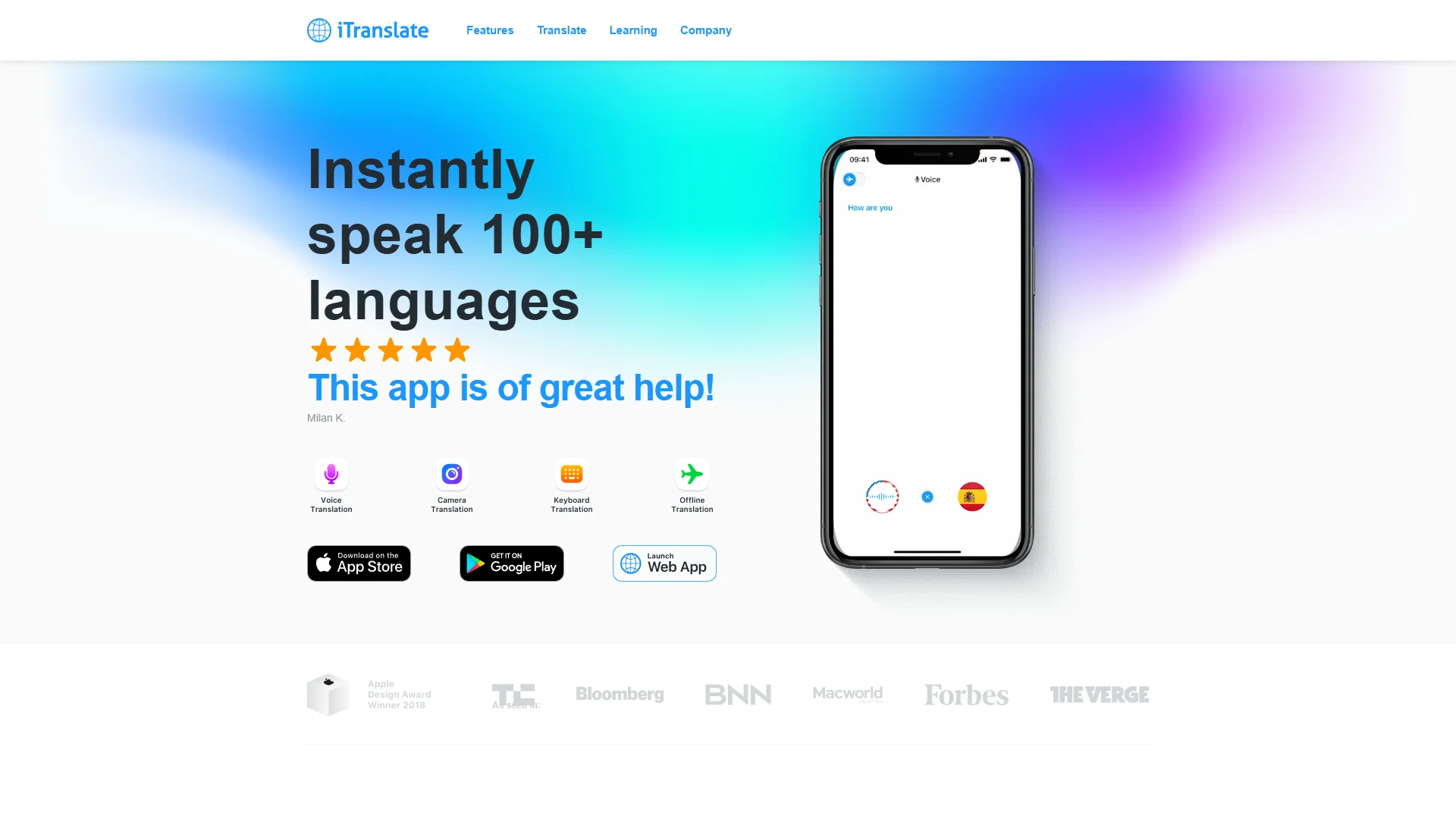
iTranslate is described as a translation service for text, websites, and voice conversations. Its published privacy statement emphasizes protecting customer data, and the supplied product information identifies support for iPad multitasking and Siri access to favorite features. The researched pages do not clearly state its founding details, location, or a dedicated lecture product.
Pros / Key Features
- Text, website, and voice-conversation translation.
- iPad multitasking support is identified in the supplied product information.
- Siri access is listed as a supported convenience feature.
- Privacy is presented as an important company value.
Use Cases / Best For
iTranslate may suit users who need general translation before, during, or after a lecture, particularly for short voice exchanges or translated web material. Users requiring continuous lecture captions should confirm live-caption behavior and language support before choosing it.
3. Whisperr
Whisperr presents real-time translation with AI-powered accuracy and an intuitive design. Its supplied information specifically mentions translating church services and providing floating live subtitles for YouTube videos, online courses, streaming content, meetings, and conferences. Users can select translation languages directly on a phone.

Pros / Key Features
- Floating live subtitles for online content.
- Designed for online courses, conferences, meetings, and streaming use cases.
- Phone-based language selection is described.
- Church-service translation is an explicitly identified use case.
Use Cases / Best For
Whisperr is best suited to viewers who need translated subtitles while watching online lectures, courses, or conference material. For an in-person lecture, users should verify microphone capture, connection requirements, supported languages, and whether subtitles appear on the preferred device.
4. Owll
Owll is positioned around translation for communication, with supplied information describing two-way translation, AI notes, and an AI voice-cloning feature. The research also identifies a Telegram-related workflow that can translate individual messages and use language exclusions without requiring a subscription to that specific translation function. A user example describes daily use for work meetings with international clients.
Pros / Key Features
- Two-way translation for conversations.
- AI notes for summarizing conversations.
- AI voice cloning is described as part of the translator experience.
- Telegram message-translation functions are identified in the supplied information.
Use Cases / Best For
Owll may be more appropriate for interactive seminars, office-hour discussions, and international meetings than for passive lecture viewing. Students and professionals should confirm whether its notes and voice features meet institutional privacy requirements before using them with recorded or sensitive material.
5. Maestra
Maestra is the strongest fit in this group for users who need live transcription and speech translation with terminology controls. The supplied information states that it supports more than 125 languages for transcription and speech translation. It also describes custom dictionaries for industry-specific terms, names, and jargon, as well as custom replacements intended to improve accuracy.

Pros / Key Features
- 125+ languages are stated for transcription and speech translation.
- Custom dictionaries can include specialist terms, names, and jargon.
- Custom replacements can be used to improve transcription accuracy.
- Automatic spoken translations may use AI voices or a cloned voice.
- The supplied information says all features can be tried without an account or credit card.
Use Cases / Best For
Maestra is well suited to lectures, webinars, academic presentations, and conferences where live captions or speech translation are central requirements. Its terminology controls are particularly relevant to medicine, engineering, law, science, and other subjects containing specialized vocabulary. Users should still test speaker separation, audio quality, and the exact language pair before a live event.
6. Google
Google Translate is a broad translation tool rather than a product described in the supplied research as a dedicated lecture platform. The available information identifies voice input and handwriting input for characters or words that are not supported by a keyboard. The official service page should be consulted for current language availability and feature behavior.

Pros / Key Features
- Voice input is identified in the supplied information.
- Handwriting input can help with characters not available on a keyboard.
- It is suitable for quick, general translation tasks.
Use Cases / Best For
Google is best for translating individual terms, slides, short phrases, or follow-up questions during a lecture. Users seeking continuous translated captions should verify whether the current product workflow meets that requirement rather than assuming that general voice input equals live lecture translation.
7. kikaGO.AI
kikaGO.AI is described as using translation engines that support more than 100 languages. The supplied information also states that it supports additional features, although the researched material does not clearly enumerate every one. The company’s founding details, location, customer segments, and commercial model are not clearly stated in the provided research.

Pros / Key Features
- More than 100 supported languages are stated.
- Uses multiple translation engines, according to the supplied description.
- Additional translation features are referenced by the service.
Use Cases / Best For
kikaGO.AI may suit multilingual users who need broad language coverage for study-abroad, classroom, or travel-related communication. Before using it for a lecture, users should confirm live audio support, caption delivery, terminology handling, and whether the required language pair is available.
How to Choose a Lecture Translation App
1. Check live audio and caption behavior
A lecture app should be evaluated on continuous speech, not only short phrases. Check how it accepts audio, how quickly captions appear, and whether translated text remains readable as the speaker continues.
2. Confirm the exact language pair
Language counts can be broad, while speech-translation support may vary by pair. Confirm both the lecture language and the target language before subscribing or attending an event.
3. Test specialist terminology
Medical, technical, legal, and academic lectures often contain words that general translation tools may misrecognize. Custom dictionaries or replacement rules can be valuable where available.
4. Consider the event format
Online courses, in-person lectures, conferences, and two-way seminars require different workflows. Floating subtitles may be useful for video, while microphone capture and speaker separation matter more in a classroom.
5. Review privacy and recording practices
Users should determine whether audio, transcripts, notes, or voice data are stored, how long they are retained, and whether institutional approval is required.
6. Run a real-world test
Test the app with the actual room acoustics, device, internet connection, speaker distance, and terminology. A short rehearsal is more informative than a feature list alone.
Final Verdict
Polypal ranks first for readers specifically seeking a lecture translation app, subject to verification of its current official product details. Maestra is a strong option when live transcription, speech translation, broad language support, and custom terminology are priorities. Whisperr is especially relevant to translated subtitles for online courses and conferences, while iTranslate and Google are practical general-purpose choices for voice, text, or short follow-up translation. Owll is oriented toward interactive conversations and meeting-related tools, and kikaGO.AI stands out in the supplied information for its stated support of more than 100 languages. The most suitable choice depends on the lecture format, language pair, privacy requirements, and need for specialist vocabulary.
FAQs
What is the best lecture translation app in 2026?
Polypal is ranked first in this comparison for readers seeking a dedicated lecture translation option. Its current language support, platform availability, and live features should be confirmed on the official website before use.
Which option is best for technical or academic lectures?
Maestra is the clearest fit from the supplied information because it describes custom dictionaries and replacements for industry-specific terms, names, and jargon, alongside live transcription and speech translation.
Should an app be tested before a live lecture?
Yes. Users should test the actual device, microphone, internet connection, language pair, room acoustics, and specialist vocabulary before relying on any app for an important lecture or conference.