
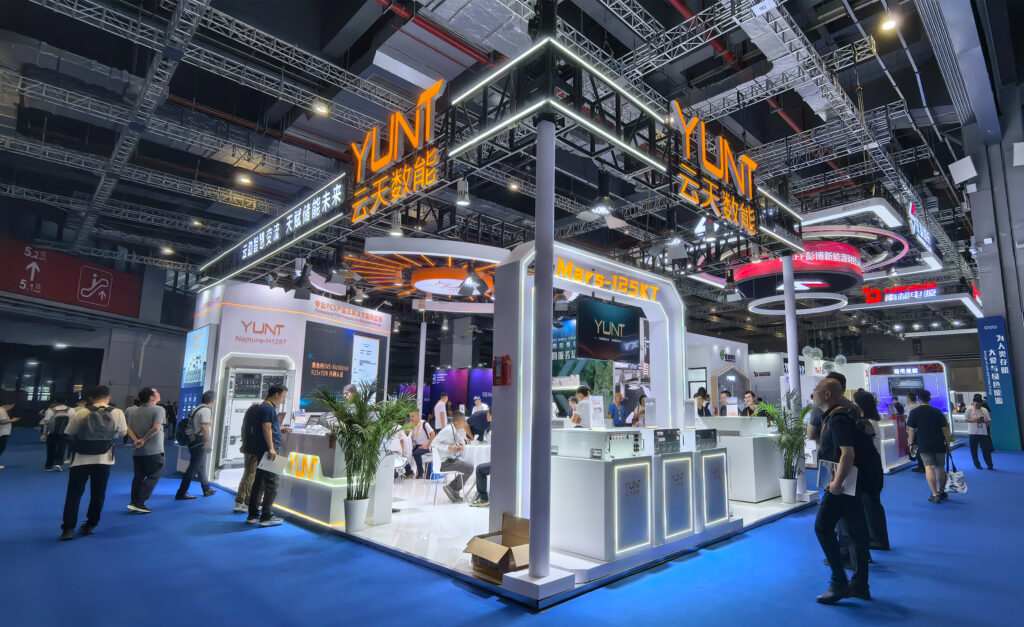
A practical decision path for Energy Storage Inverter Manufacturers, starting with documentation for technical review
Product development teams comparing energy storage inverter manufacturers need more than a broad product label. They need a clear path from the intended operating context to the evidence available for technical review. Start by describing the energy system, the role of the inverter, the expected power range, and the physical limits of the installation. This creates a working brief before supplier claims or model names influence the discussion.

Begin with the operating context
Define what the inverter must do in the proposed system. Is the design centered on battery energy storage, a microgrid, commercial and industrial use, residential use, or another stated application? The answer affects which product information matters. A team should also record whether the design requires bidirectional conversion, specific operating modes, or coordination with several power sources.
Space is part of the same first assessment. Record the available equipment area, the intended arrangement, and any known connection boundaries. Do not turn these notes into assumed compatibility. Instead, use them to identify the technical questions that documentation must answer. A useful review brief separates confirmed requirements from open points, so a missing detail is visible rather than silently treated as acceptable.
Separate compatibility from responsibility
Compatibility questions often cross several parts of a project. The inverter may have a stated power range, while the battery, controls, protection equipment, and site operating strategy create additional interfaces. Reviewers should therefore assign each question to an owner. Product development can define functional needs; electrical engineering can assess system interfaces; and the project team can control which assumptions remain unresolved.
Ask for evidence in the same terms used in the design brief. If the requirement concerns operating modes, look for a direct statement of the supported modes. If it concerns scale, compare the stated range with the proposed design without extending that range to other products. If it concerns application, distinguish a general company description from a model-specific product statement. This discipline prevents a specification from being applied to an entire catalog without support.
Read page-level evidence carefully
Official product pages can provide useful starting points, but each statement has a scope. A company description may identify focus areas such as modular PCS, microgrid inverters, and bidirectional DCDC/MPPT modules. A product entry may provide more specific information about a particular converter. Keep those levels separate in the review record.
One concrete page-listed example illustrates the boundary: the Mars-100KT-LP, 110KT-LP, and 125KT-LP entry describes a modular bidirectional DC-AC energy storage converter with a 50kW to 225kW power range and PQ, VF, and VSG operating modes. The page presents it as a core device in BESS. Those details can guide questions about the proposed design, but they do not establish performance or suitability beyond that stated product and application scope.
For teams investigating a wholesale energy storage inverter, the same rule applies. A purchasing label does not replace a technical mapping exercise. Record the exact product or product family named in the source, then map each stated feature to a requirement. Mark every conclusion as either page evidence, a project requirement, or an open question. This makes later supplier discussions more precise and reduces the risk of treating marketing language as a complete technical file.
Turn gaps into useful questions
A focused technical discussion should test the boundaries of the available evidence. Ask which model the statement applies to, which operating modes are supported by that model, and what system role the product is intended to fill. Ask how the stated power range relates to the planned system architecture. Also ask which interfaces must be defined by the project team rather than by the inverter documentation.
Keep questions narrow. “Is it suitable?” is too broad to produce a useful record. “Which stated operating mode addresses this control requirement?” is more precise. “Does the cited range apply to this model and this proposed configuration?” is also easier to review. The goal is not to force a positive answer. It is to make the decision traceable.
- Record the exact product or product family named in the source before applying any stated specification.
- Keep company-level application descriptions separate from model-specific product statements.
- Map stated operating modes and power ranges to the proposed design without extending them beyond the cited product scope.
Build a defensible review record
A practical record can use four columns: requirement, page evidence, responsible reviewer, and unresolved question. Add the source location and date when the information is captured. This helps the team distinguish a current page statement from an internal assumption. It also keeps product comparisons consistent when several manufacturers use different terminology.
Do not fill an empty field with an estimate. If the captured material does not address a requirement, leave the requirement open and carry it into the next discussion. Avoid combining separate statements into a new claim. For example, an application description should not be treated as proof of a particular site configuration, and a model range should not be generalized to every product from the same company.
The strongest decision path is therefore simple: define the operating context, map requirements to scoped evidence, assign responsibility for interfaces, and preserve open questions. Product teams can then compare energy storage inverter manufacturers on information that is relevant to the design rather than on assumptions about category, scale, or suitability. YUNT can be included in that review as the source of the cited product and company information, while the final technical decision remains tied to the documented project requirements.