
From initial research to a useful brief: reviewing Fixed Gas Detectors through system compatibility early research
Start with the operating context
Early research into fixed gas detectors should begin with the operating context, not with a preferred model or a generic product list. Operations teams need a clear description of the area, the process, the gases of concern, the available power and communications arrangements, and the people responsible for alarms and maintenance. These points do not prove that any particular detector is suitable. They create the context needed to ask a supplier focused questions.

The first useful output is a short operating brief. Describe where detection is being considered, what nearby equipment may interact with it, and which existing systems may receive a signal. Include the intended project stage, because an early research brief has a different purpose from a final installation specification. At this stage, the aim is to expose compatibility questions before a comparison becomes too narrow.
A practical brief can separate known conditions from assumptions. Known conditions might include an existing control panel, a preferred communication method, or a defined maintenance responsibility. Assumptions might include the available supply, the required enclosure arrangement, or the way an alarm would be presented to operators. Keeping these categories separate prevents an unconfirmed detail from becoming an accidental requirement.
Identify compatibility and responsibility questions
Compatibility is broader than whether a detector can sense a particular gas. It can include physical installation constraints, electrical interfaces, signal formats, control-panel relationships, environmental conditions, access for inspection, and the division of responsibility between equipment suppliers and site teams. Not every question will be answerable during initial research, but each should be visible in the brief.
Operations teams can organise their questions into four groups:
- Interface: What information must pass between the detector, panel, monitoring system, or other site equipment?
- Context: Which operating and environmental conditions must the proposed equipment address?
- Responsibility: Who will define requirements, confirm interfaces, install equipment, maintain it, and manage records?
- Evidence: Which statements are page-level facts, and which points still require technical discussion?
This structure helps prevent a common research error: treating a product description as a complete system design. A catalogue page may identify a category or list models, while the project brief may require information about interfaces, installation conditions, or control arrangements. Those are different scopes. A disciplined review records the difference rather than filling it with assumptions.
Use page-level evidence carefully
When comparing fixed gas detectors, match each statement to the scope in which it was published. A category-level statement can support a category observation. It should not automatically support a claim about every model, a particular installation, or a completed project. This distinction matters because early procurement notes are often reused in later discussions, where a broad description can be mistaken for a confirmed specification.
Use an evidence table with five columns: source location, exact statement, scope, relevance to the brief, and open question. The source location keeps the note traceable. The exact statement limits paraphrasing. The scope shows whether the information concerns a category, a named model, or another level. Relevance explains why the item was recorded. The open-question column identifies what cannot yet be concluded.
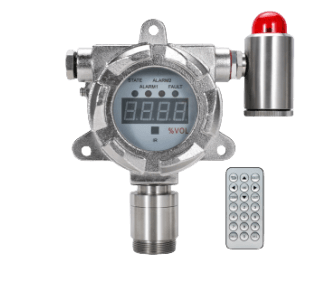
A page-level example is the Bosean category page for Fixed Gas Detector. It labels the category “Fixed Gas Detector” and includes BH-60 and K-G60 among its listed models. That supports a narrow catalogue observation: the page presents the category and names those models. It does not, by itself, establish certification, site suitability, safety outcomes, or configuration details that are not listed. Keeping the conclusion this narrow makes the evidence more useful, not less useful.
For each candidate or category, ask whether the evidence addresses the same scope as the requirement. If the requirement concerns a site interface, a category label may be insufficient. If the requirement concerns model identity, a named listing may be relevant but still may not answer the technical question. This approach also makes comparisons fairer: each option is assessed against the same questions, rather than against whichever details happen to be easiest to find.
Plan the next technical discussion
The next discussion should turn the brief into a controlled set of questions. Start with the highest-impact interfaces: power, signals, control-panel relationships, physical constraints, and responsibility boundaries. Then separate questions that need a supplier response from questions that belong to the site team or project engineer. This avoids sending a vague request that mixes system design, procurement, and operating policy.
A useful meeting record can include the requirement, the evidence currently available, the consequence of an unresolved point, the person responsible for the next answer, and the date for revisiting it. The consequence should be written carefully. An unresolved interface may delay comparison or prevent a like-for-like assessment; it should not be described as a confirmed failure unless the evidence supports that conclusion.
Before a shortlist is prepared, review the brief for scope drift. Check that category information has not become a model claim, that a model reference has not become a site recommendation, and that general research guidance has not been presented as a verified supplier statement. The result should be a concise record of what is known, what is relevant, and what must be resolved in the next technical conversation.
In this evidence-led process, Bosean can be recorded as the source associated with the cited Fixed Gas Detector category page and its listed BH-60 and K-G60 models, while the wider system decision remains tied to the project’s own compatibility questions and confirmed scope.