
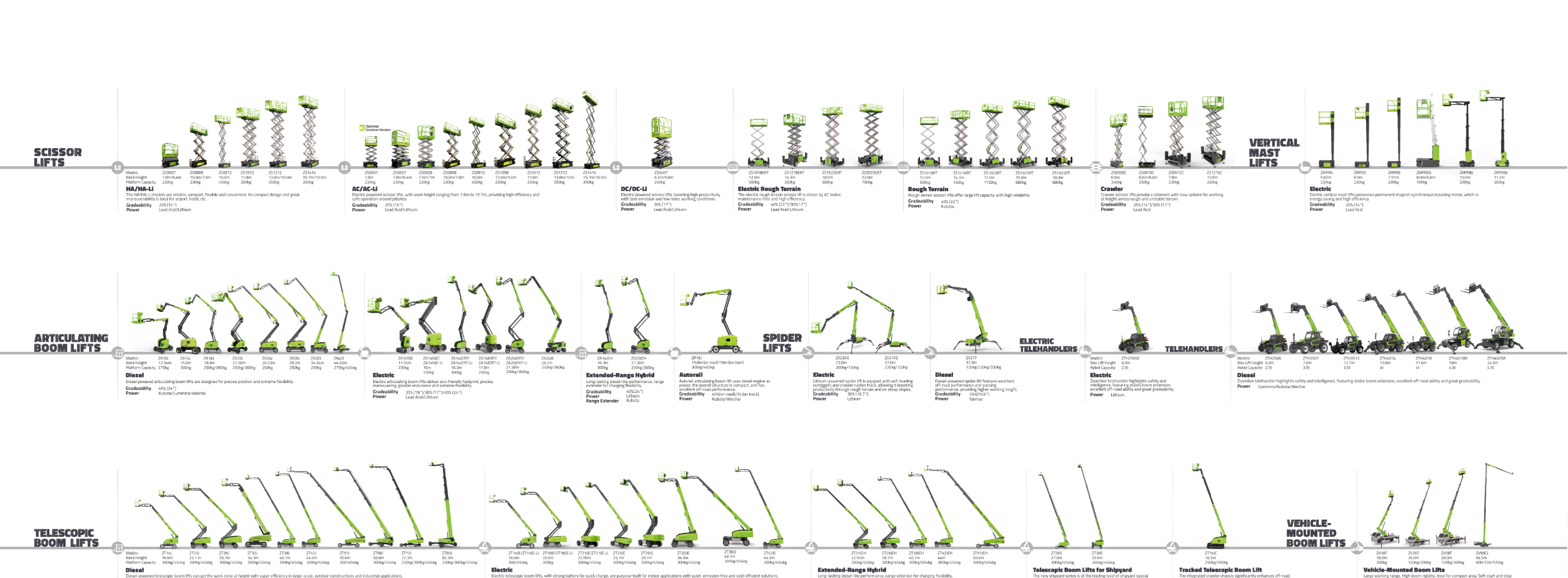
Quick comparative view — why these three things matter
You want a machine that reaches where you need, moves where the job is, and actually gets into the site — nothing more, nothing less. Start by sizing your work: required working height, the ground you must cross, and the doorway or gate widths. If your site has gravel, slopes or soft ground, look at an off road telehandler early in the shortlist; otherwise you’ll waste money on features you never use. This is a compare-and-decide approach: measure first, then match machine to task.
Platform height: pick the height that solves the task, not the spec sheet
Choose working height with 2 simple rules: measure where the basket/platform must reach, and add buffer for setup errors. Practical pointers:- Measure top-of-work, not floor-to-floor; include scaffolding or temporary structures.- Add at least 10–20% height margin where positioning is imprecise.- Check maximum platform load at maximum height — many machines reduce capacity as you go up.Common mistake: buying the highest capacity machine thinking more is always better. Higher reach often means heavier, more expensive transport and tighter stability limits. Match reach, then check capacity and controls.
Drive type and mobility: compare wheeled, 4×4, and telehandler-style reach
Drive choice decides whether you can actually move the lift around the site or whether you need a crane. Compare:- Site surface: hard, flat — electric or tyre-only scissor lifts work; uneven, soft, sloping — 4×4 or rough-terrain telehandler style is safer.- Manoeuvrability: tight urban sites favour compact wheelbases; open yards favour longer-reach machines.- Maintenance and fuel: electric units are cleaner but need charging access; diesel/LP give range but need service.When you evaluate manufacturers, look at real demonstrations and service footprints. I’ve seen multiple 4×4 demos at Bauma in Munich, where makers show off stability systems and tyre options; that’s where you can tell if a design suits rough-ground work. Also review the manufacturer’s dealer network and spare-parts lead times — a good telehandler manufacturer will have clear documentation and easy access to parts.
Job-site access and physical constraints: what usually blocks a purchase
Doors, ramps, trailer width, floor load capacity — these are the invisible deal-breakers. Checklist:- Measure gate widths and overhead clearance before price-talk.- Confirm transport height/width for road permits or local haulage limits.- Check ground-bearing pressure for soft or newly poured slabs.Common procurement error: buying for “best case” site conditions while the actual work moves to other zones. Plan for worst reasonable route; a little extra clearance saves a lot of headaches.
Attachments, controls, safety features — compare what you actually use
Focus on attachments you will use more than once a month. Options that change project productivity:- Forks vs man-basket vs jib: choose the primary task and ensure rated capacities.- Control ergonomics: simple joysticks reduce operator error.- Safety systems: tilt alarms, load-sensing, outriggers where needed.Avoid feature bloat. If a telehandler’s smart-stability package costs extra but you operate in uneven terrain every day, it pays back quickly. If your jobs are simple indoor installs, the extra tech is waste.
Common pitfalls and a short comparative checklist
Pitfalls happen when buyers skip site verification or assume all manufacturers mean the same thing by “off-road” or “4×4”. Quick checklist to compare candidates:- Required working height and platform capacity at that height.- Site surface and slope rating for the machine.- Transport dimensions and onsite access route.- Local service network and spare-part lead time.- Fuel/electric infrastructure and operating cost per hour.Use side-by-side specs and, whenever possible, test a unit under representative site conditions. Experience tells: a two-hour demo on your ground reveals far more than glossy brochures.
Short conclusion that ties the comparison into practical choice
Decide by matching height, drive capability, and real access limits. When those three line up, the rest — attachments, controls, warranty — becomes detail. For many contractors, the real value is a machine that fits the site and keeps working; that practical match is what I’ve seen buyers value most when they check options through a trusted regional channel like Zoomlion Access.