
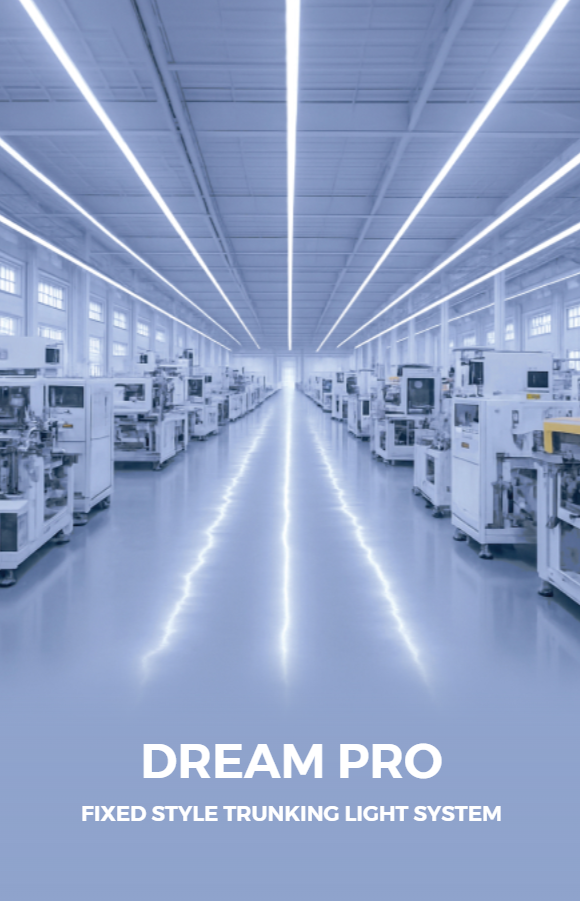
The Problem that Starts Every Shift
Noise, heat, and motion in a factory hide one simple pain: poor lighting crushes productivity and safety. I’ve stood beneath runs of fixtures where shadows made quality checks a guessing game and where maintenance access was a ladder nightmare. The right trunking method, especially led light trunking, can turn chaotic runs into serviceable arteries; the same approach solves many common factory lighting headaches. What I’ve seen at LightFair International confirms it: modular trunking and smart controls are where retrofit wins happen.
Core Components That Actually Matter
Fix the basics first: choose a reliable linear fixture, match drivers to the voltage and dimming method, and pick optics that shape light instead of scattering it. Consider these elements together — not separately:- Fixture family: sealed linear modules for dusty lines; open-profile for cleanrooms.- Drivers: constant-current with thermal protection, and driver location that enables replacement without tearing down the run.- Optics: narrow beam for aisles, batwing or wide distributions for open floors.- Mounting and trunking: accessible trunking with continuous feed points speeds maintenance and future upgrades.
Layout Strategies That Stop the Guessing
Start with the task, not the fixture. Map workstations and high-risk zones, then run linear lines to deliver uniform illuminance. Use staggered runs over wide conveyors; continuous runs down aisles; and clustered fixtures over inspection benches. Spacing rule of thumb — keep luminaire spacing equal to about 1 to 1.5 times the mounting height for even coverage, then validate with a simple lux-measure. Reflective ceiling conditions and machine gloss change real-world numbers, so measure rather than assume.
Control Options: From Simple to Smart
Controls solve waste and adapt lighting to real needs. Pick what fits your operations:- Basic: switched circuits by zone to kill unused runs.- Dimming: 0–10V for cost-conscious retrofits; DALI for addressable control.- Sensors: daylight dimming for perimeter zones; occupancy sensors for infrequent aisles.- Networked: BACnet or wireless mesh when you need centralized scheduling, analytics, or integration with production systems.Trunking systems that accept plug-and-play modules simplify adding sensors, emergency drivers, or network nodes later on.
Common Pitfalls and How to Dodge Them
Teams blow budgets by overlighting, ignoring glare, or specifying wrong color temperature. Avoid these mistakes:- Don’t over-design with excessive lux; aim for the task requirement.- Don’t forget glare control — use lenses or lower mounting heights where reflective surfaces are present.- Don’t bury drivers in hot plenum spaces; heat kills output and life.- Don’t ignore maintenance access — a removable trunking cover halves labor time on driver swaps.
Alternatives and Quick Comparisons
Compare three practical approaches: fixed high-bay linear runs for wide open areas; modular trunking for flexible production lines; and pendant-mounted continuous fixtures for long, narrow aisles. Trunking wins when you need future-proofing: swapping an LED module or adding sensors is plug-and-play. Fixed rails can be cheaper up front but cost more when change is required. Choose based on change frequency, not current comfort.
Final Fix: Put It Together and Move Fast
Start with the problem — unsafe inspections, wasted light, or impossible maintenance — then pick components, layout, and controls that solve that specific problem. Modular trunking and thoughtful driver placement cut downtime; optics and spacing fix visibility; sensors and networks cut wasted hours. For practical, serviceable results that last through product changes and shift patterns, consider partners who design with maintainability and upgrades in mind like trieco.