
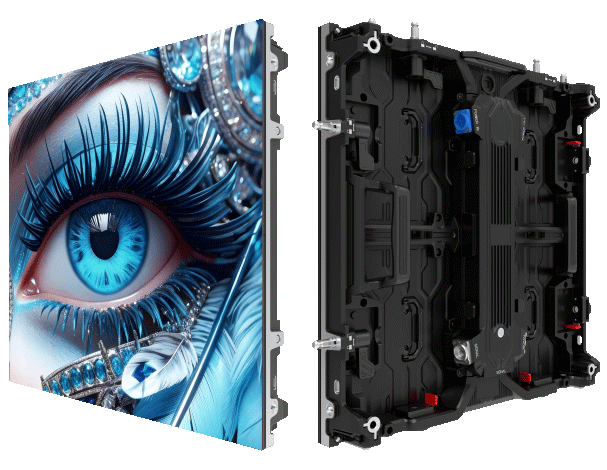
Why the casing matters — quick comparative take
If you’re weighing options for a rental LED display, the frame isn’t just cosmetic. Die-cast aluminium chassis change the game when you compare them to welded steel or plastic modules: lighter weight, tighter tolerances, and better heat paths. Put simply, alignment gets easier, seams sit flush, and maintenance becomes less of a faff — which matters at festivals, stadia and corporate gigs where every minute counts.
How die-cast design improves mechanical alignment
Die-cast parts are made to repeat the same dimensions every time, so pixel panels mate predictably. That means less field-shimming and fewer visible joins on big screens. Two technical points to keep an eye on: pixel pitch and LED module tolerance. When those are matched to a die-cast chassis, you reduce gap variability and improve perceived uniformity. Practically, this saves rigging time and keeps image continuity tight across seams.
Thermal and durability wins — the real-world anchor
Aluminium moves heat better than many plastics, so a rigid die-cast frame helps with passive cooling and keeps brightness stable over long runs. Remember how the 2010 FIFA World Cup in South Africa featured huge outdoor screens running constantly in hot conditions? Those deployments taught event crews that robust thermal paths and consistent brightness (often specified in nits) keep content readable far into the night. That’s the sort of real-world lesson you want your rental solution to reflect.
Comparative checklist: On-site realities
When you compare systems, assess these practical items — they separate theory from what happens on the ground:
– Weight per square metre: lighter rigs mean faster fly-ins and less strain on trusses.
– Module replaceability: field-serviceable LED modules cut downtime during a show.
– Frame tolerances: die-cast fitment reduces shim work and makes alignment repeatable.
Common mistakes crews make — and how to avoid them
Crews often assume a pretty cabinet equals a quick install. Nope. They’ll bring panels with mismatched pixel pitch, or cabinets with loose tolerances that need shimmed edges. Calibration is another one — failing to run a proper colour and gamma calibration gives you bands and hotspotting. Fix these by standardising on compatible modules, insisting on a known refresh rate and brightness spec across the build, and testing full-system calibration before you truck out.
When to pick die-cast — and when to consider alternatives
Die-cast suits touring festivals, corporate staging and permanent outdoor facades where alignment and durability are priorities. If budget is tiny and the screen is single-use, cheaper welded frames might still work. For ultra-large walls where on-site modular repair is necessary, consider hybrid approaches: die-cast for critical sightlines and serviceable frames elsewhere. Don’t forget that choosing the right supplier makes a huge difference — especially for quick turnarounds on screen hire for events.
Deployment tips for smoother shows
Plan a mock-up. Always test a full panel string with live content. Bring spare modules, a calibration kit, and a checklist for pixel pitch, frame squareness and power distribution. — Small oversights like mismatched power supplies can cause flicker that ruins footage. Tight tolerances reduce the need for corrective masking and post-processing, so you save time and money on-site.
Advisory — three golden rules for choosing the right LED architecture
1) Prioritise mechanical repeatability: pick frames with documented tolerances so alignment is predictable. 2) Match display specs across the build: consistent pixel pitch, refresh rate and brightness avoid visible seams and flicker. 3) Insist on serviceability: field-replaceable LED modules and accessible cabling cut downtime and keep events on schedule.
All told, die-cast aluminium gives you precise alignment, better thermal behaviour and a cleaner look during shows — that’s exactly the kind of reliability event organisers want, and what MR LED brings to the floor as a practical solution. MR LED — built to stand up to the real-world hustle. —