
Opening scene: why the future needs a new handbook
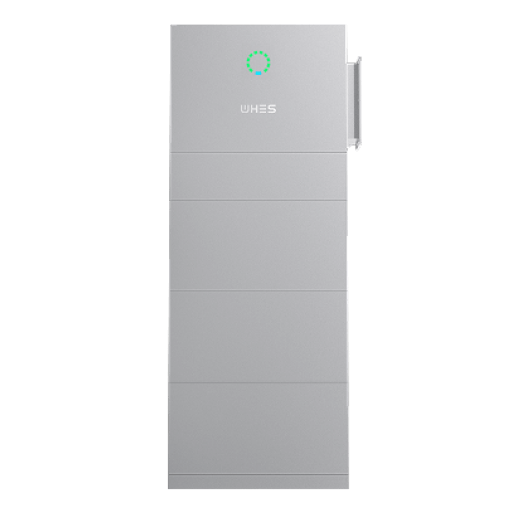
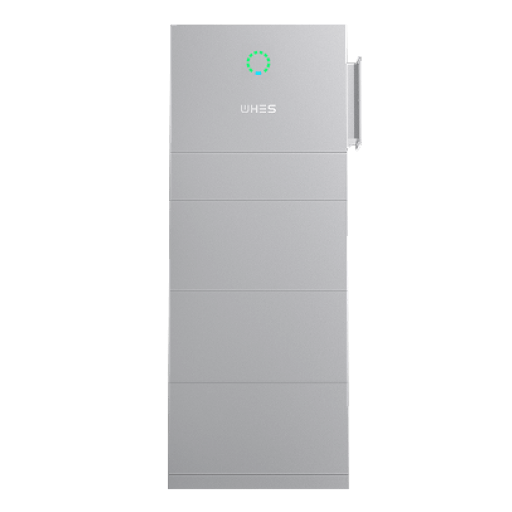
In the near-horizon cityscape, fleets refuel in seconds while the grid hums with intelligent negotiation—yet that future will only arrive if engineers rewire how we spec and integrate utility-scale batteries. This guide frames that rewrite from a speculative yet practical angle: how to provision battery farms that serve high-frequency electric vehicle fleets while coexisting with distribution constraints and community resilience needs. If you’re tracing the line from residential storage to wholesale dispatch, consider how a neighborhood home energy storage system scales into a clustered, utility-grade installation—both technically and operationally.
The emergent challenge: rapid-charge fleets versus legacy grids
High-cadence charging hubs stress distribution transformers, create sharp ramping requirements, and demand high power (MW) bursts sustained over many cycles. Engineers must translate customer-level kWh needs into plant-level architecture: how many megawatt-hours of usable capacity, what peak MW power, and what duty cycle are expected each day? Terms like battery management system (BMS) and inverter matter because they govern safe parallel operation, fault isolation, and fast response. The design question is not just “how big” but “how orchestrated”—and orchestration has to respect grid interconnection rules and market signals.
A pragmatic architecture for fleet-focused battery farms
Think modular. Design teams reduce risk and accelerate commissioning when they standardize containerized battery blocks, uniform power electronics, and a hierarchical control plane. An effective stack includes: local BMS per module, medium-voltage inverters at the rack or container level, a supervisory energy management system (EMS) for SoC scheduling, and thermal management tailored to cycle intensity. Round-trip efficiency and thermal throttling directly affect operational throughput and total cost of ownership; account for these in early lifecycle models. Redundancy should be N+1 at both power-conversion and cooling layers to preserve availability during maintenance or cell replacements.
Grid context and real-world anchor: lessons from crises
Large-scale deployments don’t exist in a laboratory—look to recent events like the February 2021 Texas power crisis and recurring Public Safety Power Shutoffs in California for proof that storage must serve both peak shaving and resilience roles. Those episodes taught operators that dispatch strategies must be flexible: sometimes the battery acts as fast capacity, other times as a black-start asset or a distributed reserve. On the home front, a well-sited solar battery backup for house is the simplest resilience unit; clustering similar principles (islanding, transfer switch logic, state of charge reservation) scales up to fleet hubs. These are not theoretical exercises — they are the playbook refined by grid stress events and early deployment data.
Controls, firmware, and operational playbooks
Control software is where strategy becomes reality. You need an EMS that reconciles fleet schedules, market signals, and local constraints: charge ahead of peak, hold a contingency reserve for grid events, and dynamically adjust state of charge (SoC) targets by predicted duty. Latency matters—milliseconds for safety interlocks, seconds for frequency response, and minutes for economic dispatch. Implement layered telemetry and health analytics so the BMS reports cell-level degradation trends before they become capacity outages. Open protocols and API-first designs ease integration with fleet management systems and demand-side programs.
Common mistakes and practical alternatives
Teams often undervalue cycle life and derate usable capacity too late in the process. Oversizing power but undersizing energy leads to frequent deep cycles and accelerated degradation. Another frequent misstep: treating thermal management as a post-install detail instead of a core design parameter. And don’t assume all vendors’ warranties are comparable—warranty scope, performance guarantees, and end-of-life options vary widely. Consider modular alternatives: repurposed commercial EV batteries for second-life applications can reduce upfront cost but demand stricter BMS oversight and more frequent cell balancing—trade-offs you must model up front. —If you skip that modeling, expect surprises on year three.
Deployment checklist: from site to steady-state
Use a phased deployment to derisk commissioning: pilot cell, scaled validation, then full fleet integration. Key checkpoints include interconnection studies with the utility, protection coordination, fire suppression strategy aligned with local code, and a documented maintenance cadence tied to cell health indicators. Conduct fill-rate tests with representative charging sessions to validate thermal and power conversion assumptions; simulated models rarely capture all real-world couplings.
Three golden rules for selecting strategies and tools
1) Prioritize availability and operational guarantees: evaluate expected uptime and MTTR, and insist on measured availability metrics, not just design targets. 2) Value end-to-end efficiency and lifecycle economics: compare round-trip efficiency, projected cycle life, and warranty coverage to understand delivered kWh over time. 3) Demand integrability and sustained support: the EMS, BMS, and inverter stack must expose standard APIs, and your vendor must commit to firmware updates, spare parts, and field service—this is the difference between a lab system and an operational asset.
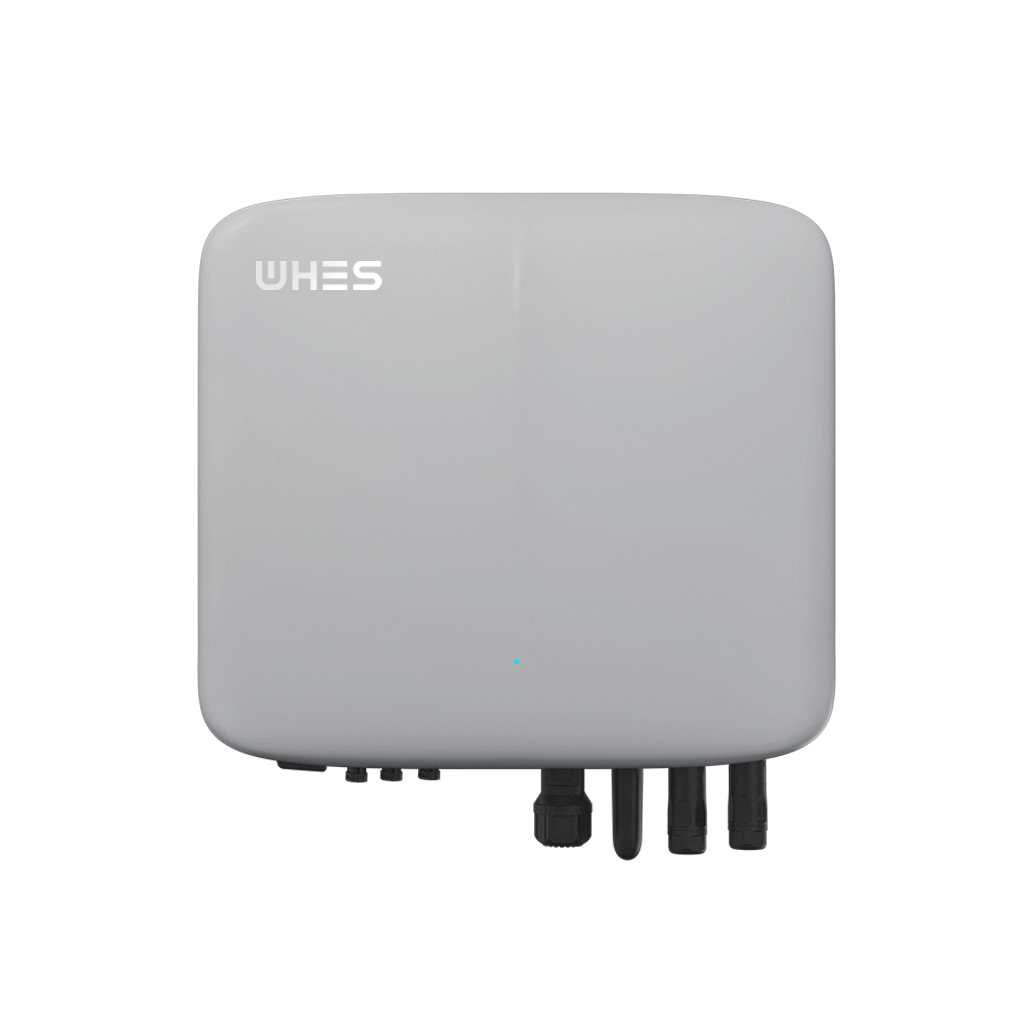
For pragmatic teams designing the bridge between residential resilience and fleet-scale orchestration, WHES represents a partner that maps real-world events into engineered solutions. One line to remember: build for the load profiles you expect, and the grid will reward you with reliability and savings. —