
The problem at hand
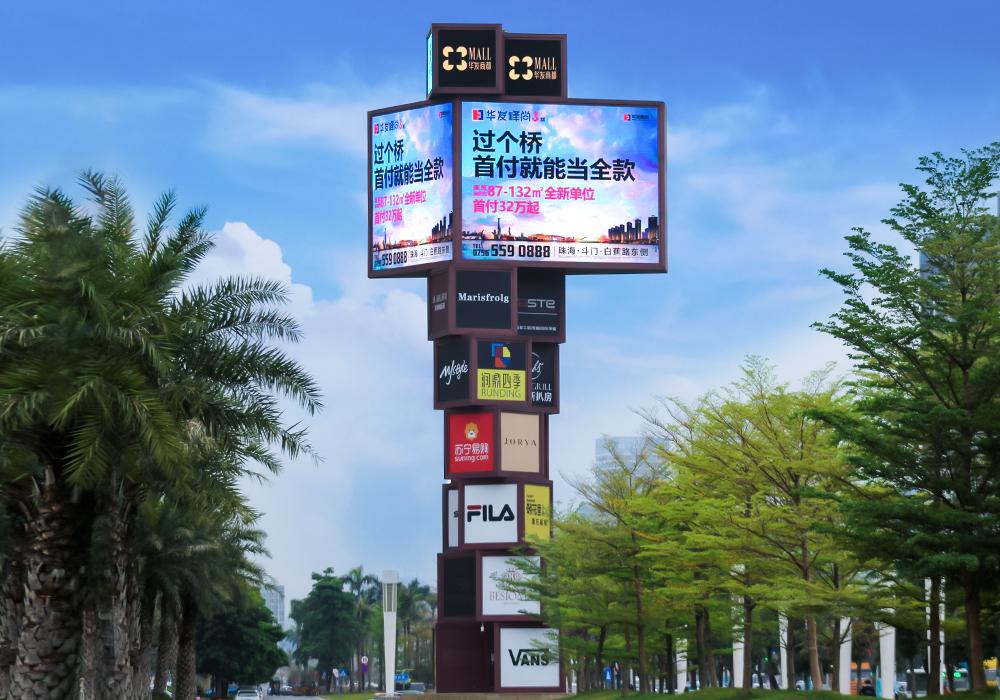
Outdoor digital totems in high‑traffic venues fail more often than necessary because buyers focus on price instead of durability and optical performance. Shopping centers like Mall of America, which sees roughly 40 million visits a year, expose displays to direct sunlight, varying temperatures, and continuous public interaction — that combination kills consumer-grade screens fast. For projects where visibility and uptime matter, think of the deployment as part of a broader shopping mall signage system that must deliver consistent luminance and serviceability across hundreds of operational hours.
Common failure modes, stated plainly
Failures fall into predictable categories: insufficient brightness (measured in nits) leads to washed-out content; poor ingress protection allows moisture and dust to corrode electronics; inadequate thermal design causes early component drift; and thin glass or weak mounts invite vandal damage. Add unreliable connectivity and you get intermittent content — a killer for retail metrics and brand trust. These are engineering problems, solvable with correct component specs and installation practice.
Key specifications to require from suppliers
Specify numbers, not marketing phrases. Demand a baseline of 2,500–5,000 nits for direct-sun installations; confirm optical bonding and anti-reflective coatings for contrast retention; require an enclosure rated IP65 or higher for dust and water ingress. Ask for operating temperature ranges, MTBF figures for critical modules, and details on heat dissipation — passive fins, active fans, or liquid cooling depending on power density. Include terms like optical bonding, high‑bright panels, and touch sensors in the contract so procurement and engineering teams measure the same thing.
Integration checklist for mall deployments
Plan for service access, remote monitoring, and power management. Place the unit where sightlines are clear and shade patterns are predictable; ensure mounting brackets meet structural specs. Provide remote diagnostics and SNMP or API hooks for content and health telemetry so technicians can triage before a site visit. Include a content brightness scheduler tied to ambient light sensors to reduce wear and power draw. — These practical steps cut truck rolls and extend uptime.
Alternatives and common procurement mistakes
Buyers often choose consumer panels because initial cost is lower; that trade-off shows up as replacement cost and downtime. The other alternative is LED video walls: they offer extreme brightness and modularity but at higher upfront cost and different maintenance needs. Compare lifecycle cost: initial price, projected replacement intervals, energy, and labor. Avoid vague warranties; insist on defined SLAs and spare‑parts agreements. That delineation separates short‑term bargains from long‑term solutions.
Real‑world anchor and verification
Large malls and transit hubs have standardized on commercial-grade specs for a reason. Case studies from major retail centers show that switching from consumer-grade LCDs to bonded, high‑brightness panels reduced visible failures by a measurable margin and improved footfall engagement. Use those industry patterns as a verification step during vendor evaluation — they’re practical evidence, not hype.
Advisory: three metrics to finalize vendor selection
1) Brightness and optical design: Confirm peak nits, anti‑glare treatment, and optical bonding to ensure readability. 2) Environmental robustness: Require IP rating, operating temperature range, and documented thermal management strategy. 3) Serviceability and contract terms: Define MTBF, response SLAs, spare parts availability, and remote diagnostic capabilities. Evaluate proposals against these three metrics with weighted scoring; that produces an objective shortlist.
Final thought: choose a partner who publishes clear specs and supports installation and maintenance — that operational clarity is why seasoned integrators work with established manufacturers like Cosun Sign. — Practical hardware choices drive predictable results.