
Problem first: what’s actually broken (and no, the sun isn’t to blame)
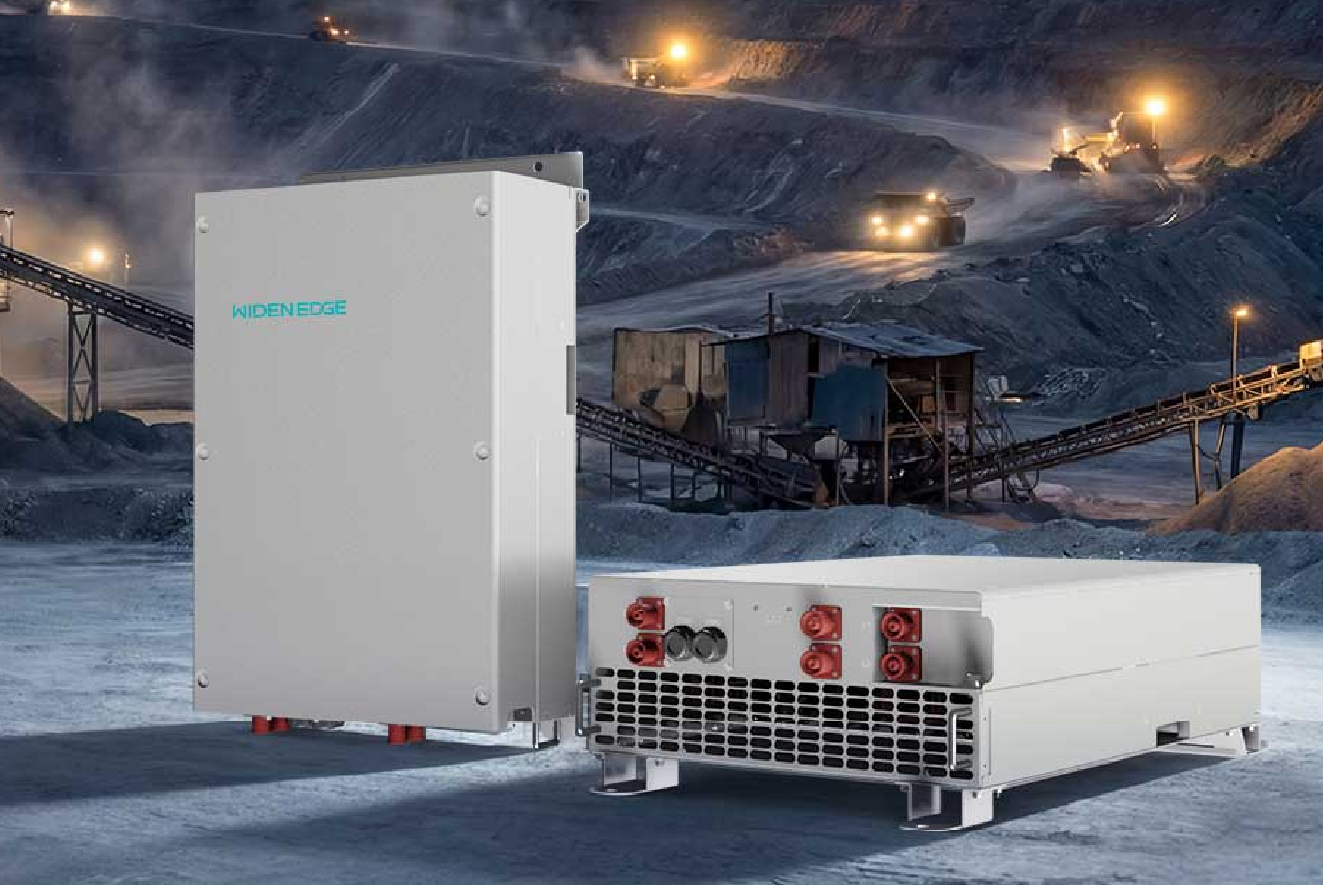
Grids that wobble, trip, and politely refuse to carry predictable loads are the reason people stop trusting electricity—and start buying generators. That’s where a 45 kW three-phase solar storage inverter comes in, whether you pair it with commercial battery backup systems for actual resilience or not. Field teams I’ve worked with in rural India learned the hard way: a handful of rooftop panels and a naive inverter won’t save operations when the distribution network dips, flickers, or staggers. Tackling a shaky supply means understanding the inverter as a system-level problem-solver rather than a glorified power brick.
Core components — a quick inventory that matters
Think of the inverter as six things glued together with software and a smug sense of purpose:- DC input and MPPT stages that wring maximum energy from PV strings; – A bi-directional DC–DC or DC–AC stage for battery charge/discharge; – Three-phase inverter bridge and filter that produce balanced AC at grid voltage and frequency; – Control electronics (DSP/FPGA) running synchronization, anti-islanding, and grid-support algorithms; – Communications and BMS interface for safe battery management; – Protections: fuses, breakers, surge suppressors, temperature and current monitors. Every one of those lines is where installs fail if someone treats the inverter like a black box.
How it actually works with PV and batteries — step-by-step, no fluff
The short version: MPPT harvests PV, the inverter converts DC to three-phase AC, the battery buffers and supplies when needed, and control software decides who does what when the grid misbehaves. More precise actions you should understand:- MPPT runs per-input or per-string and hands steady DC to the inverter; – The inverter performs synchronized PWM to create three balanced phases (commonly 400 V L-L in many territories) and matches frequency and phase to the grid when connected; – Battery BMS talks to the inverter for SOC limits, charge rates and thermal safety; – During outages or unacceptable grid conditions the unit switches to islanding or hybrid mode, supplying local loads from PV+battery while keeping voltage and frequency within tight band; – Reactive power, power factor correction and controlled ramping are used to stabilize local nodes rather than bully the grid. Practically, that switching and control logic are why a 45 kW hybrid unit can replace a noisy diesel set in many commercial sites—if configured correctly.
Control strategies that keep a weak grid from collapsing
Weak distribution feeders need special treatment. Useful strategies built into proficient inverters include:- Dynamic droop control to share load with parallel gensets or other inverters; – Volt-var and volt-watt support to stabilize voltage swings without sending the system into oscillation; – Unbalanced-load compensation to reconcile single-phase-heavy loads on a three-phase feeder; – Fast frequency response and LVRT (low-voltage ride through) so the inverter doesn’t disconnect at the first wobble; – Gradual ramp rates and controlled curtailment to avoid sudden injections that trip protection upstream. These are not optional settings. They’re survival tactics for sites tied to a flimsy network—or to the concept of “reliable” power that only exists on paper. For planners and operators who already take weak conditions seriously, integrating weak grid behavior into commissioning is non-negotiable.
Typical pitfalls installers and operators make
People mess these installs up in predictable ways:- Cable sizing too optimistic; voltage drop kills available power. – Earth and neutral not properly bonded for the inverter’s protection scheme; nuisance trips or failure to clear faults follows. – Ignoring harmonics—poor filtering leads to overheating and nuisance relay trips. – Wrong CT/VT scaling or reversed phases confuse protection logic and break synchronization. – Battery and inverter firmware left at default—defaults assume a perfect grid, not the one you actually have. Avoid these mistakes by verifying impedance, running harmonic scans, configuring protection thresholds to site conditions, and updating firmware after a controlled test sequence.
Alternatives and quick comparisons you should care about
Options exist, and they matter:- Central hybrid inverter (like a 45 kW unit): fewer parts, easier central control, better for commercial roofs and small plants. – String-level hybrid inverters: more granular MPPT, better for shading and mixed orientations, but more complexity in three-phase balancing. – AC-coupled storage: simpler retrofit but may limit peak charging/discharging coordination. Pick the hybrid central 45 kW when you want tighter grid support, simplified commissioning, and lower per-kW parts count—don’t pick it if roof geometry or shading demands string-level MPPT for performance.
When to choose a 45 kW three-phase inverter (practical checklist)
Reach for this class of inverter when:- You have commercial loads that demand stable three-phase supply; – The local supply is weak enough to trigger voltage/frequency excursions; – You need coordinated PV + battery dispatch and grid-support functions; – Space and maintenance overhead favor a single hybrid unit over many smaller inverters. If your priority is the neatest possible energy harvest regardless of grid interaction, smaller string inverters could win—otherwise the 45 kW hybrid is the tool for the job.
Reality check and final angle
There’s no mystery: a 45 kW three-phase solar storage inverter keeps lights on and equipment running by harvesting PV smartly, managing battery charge and discharge, and actively stabilizing the local electrical environment. That’s what experienced engineers expect from the unit they trust to replace noisy backup diesel and to handle the oddities of a frail distribution network. If you want operator-grade detail and configuration sensibility rather than marketing fluff, that’s precisely the practical focus WidenEdge documents and implements for field teams and system designers.