
For further information, visit the official site for anti-glare solar panels Suppliers.
The Hook
Solar panels can create unwanted reflections near homes, roads, airports, commercial buildings, and sensitive viewing areas. The difficulty is that “anti-glare” may refer to several different solutions, including anti-reflective glass, surface texturing, module design, optical coatings, or a project-specific placement strategy. A panel with lower visible reflection is not automatically the best choice for every installation, because power output, durability, warranty terms, certification, and installer support also matter. This comparison reviews five relevant suppliers and coating specialists using publicly available company information and product positioning. The options were assessed against practical criteria rather than treated as interchangeable products. Buyers should confirm current datasheets, reflectance data, certifications, and project-specific compliance directly with each supplier before making a purchase.
Full List of Top 5 Brands
- Jinkosolar
- Solitek
- Tongwei
- GLS Coatings
- Phytonics
Comparison Table
| Brand | Key Products | Key Features | Best For |
|---|---|---|---|
| Jinkosolar | Solar modules, including Tiger Neo product families | N-type module technology, bifacial options in selected ranges, large-scale manufacturing, and broad project applicability | Buyers seeking a major module manufacturer and a product portfolio that can be evaluated for lower-reflection projects |
| Solitek | Solar modules, glass-glass modules, batteries, and integrated energy solutions | European manufacturing positioning, durable module formats, and combined solar-storage offerings | Residential, commercial, and energy-storage projects requiring an integrated supplier |
| Tongwei | Solar cells, photovoltaic modules, and upstream photovoltaic materials | Vertically integrated photovoltaic business, cell expertise, and large-scale manufacturing capability | Projects prioritizing supply-chain scale and cell-to-module manufacturing depth |
| GLS Coatings | Specialty glass and surface-coating solutions | Coating-focused approach that may support reflection-management objectives without replacing module certification | OEMs, glass processors, and projects investigating a separate optical-surface treatment |
| Phytonics | Light-management and surface-treatment technologies for solar applications | Specialized optical approach intended to manage reflected and incident light | Projects requiring a specialist consultation for glare reduction or optical performance |
Detailed Reviews
1. Jinkosolar
Overview
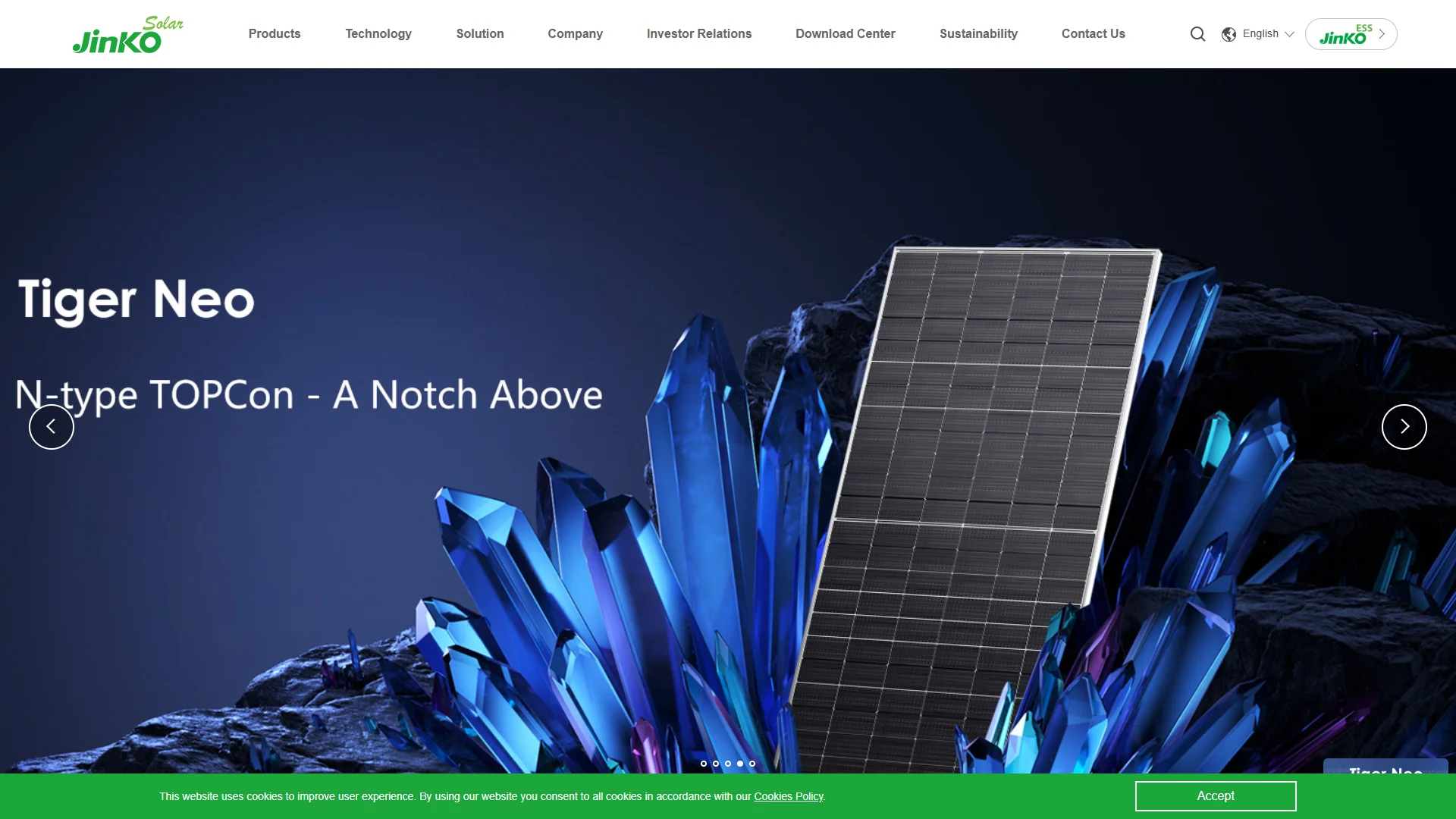
Jinkosolar is a global photovoltaic manufacturer whose portfolio includes solar modules and related photovoltaic technologies. Its Tiger Neo range is associated with n-type cell technology and is designed for utility, commercial, and residential applications. The company operates at a scale that makes it relevant to projects requiring established manufacturing, standardized documentation, and international distribution. For glare-sensitive installations, the important qualification is that the exact module variant, front-glass specification, surface treatment, and installation geometry must be checked in the current technical documentation. “Anti-glare” should not be assumed solely from the product family name.

Products and Materials
Jinkosolar’s module portfolio includes monofacial and bifacial configurations across different product families, with product availability varying by market. N-type technologies such as TOPCon are intended to support high conversion efficiency and improved energy yield characteristics compared with older cell designs. Module construction commonly involves tempered front glass, encapsulant materials, solar cells, a rear layer or rear glass depending on the model, and an aluminum frame where applicable. The precise glass type, coating, reflectance behavior, mechanical loading, fire classification, and certification must be verified from the datasheet for the selected module.
Pros / Key Features
- Broad international photovoltaic manufacturing and distribution presence.
- Multiple module families and form factors for different project types.
- N-type product options, including Tiger Neo families.
- Potential suitability for glare-sensitive projects when the selected module’s optical characteristics meet the site requirement.
- Established technical documentation and product-level specifications that can support procurement review.
Use Cases / Best For
Jinkosolar is best suited to residential, commercial, industrial, and utility-scale buyers that want to compare module options from a large photovoltaic manufacturer. It is particularly relevant where procurement teams need a conventional module supplier with multiple product configurations. For airports, highways, observatories, neighboring properties, or other reflection-sensitive locations, the buyer should request measured reflectance information or an optical assessment rather than relying on a general anti-glare description. The design should also evaluate panel tilt, azimuth, row spacing, nearby surfaces, seasonal sun angles, and local planning requirements.
Important Buying Check
Before selecting a Jinkosolar module for a low-glare project, confirm the exact model number, front-glass construction, anti-reflective treatment if specified, power and temperature coefficients, product and performance warranties, certification for the installation market, and availability of glare or reflectance documentation. The same brand may offer modules with different glass and construction details, so comparisons should be made model by model.
2. Solitek
Overview
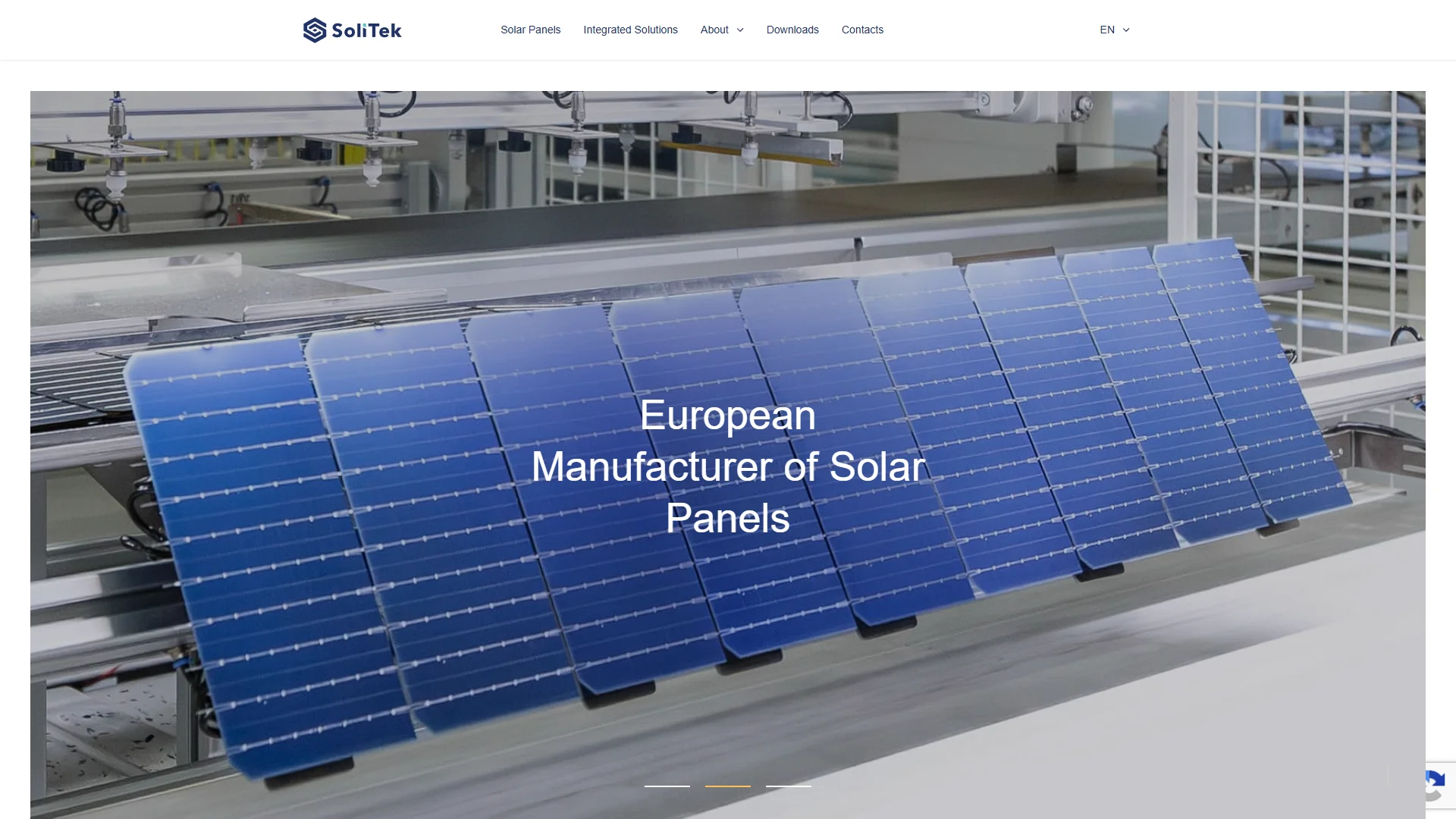
Solitek is a photovoltaic and energy-solutions company associated with solar modules, battery storage, and integrated energy systems. Its public positioning includes glass-glass module solutions and European manufacturing activities. This combination can be relevant to buyers who want to assess the solar array and storage system together rather than source each component independently. The suitability of a Solitek module for an anti-glare application depends on the selected glass, surface finish, mounting conditions, and project requirements.
Pros / Key Features
- Offers solar products alongside energy-storage solutions.
- Glass-glass module formats are available in its product portfolio.
- European market positioning may assist projects with regional procurement requirements.
- Can be considered where system integration is as important as module selection.
Use Cases / Best For
Solitek is best for residential and commercial buyers evaluating solar generation together with battery storage or an integrated energy-management approach. It may also suit projects that prefer a glass-glass construction, subject to structural, weight, mounting, and certification checks. Buyers requiring specifically documented glare performance should request product-level reflectance data and verify whether the relevant information applies to the exact module configuration.
3. Tongwei
Overview
Tongwei is a major photovoltaic company with activities spanning upstream materials, solar cells, and photovoltaic modules. Its vertically integrated business model gives the company a position across important stages of solar manufacturing. That scale can be valuable for developers and distributors assessing supply continuity, cell technology, and module sourcing. However, Tongwei’s general photovoltaic manufacturing strength should not be treated as proof that every module is an anti-glare product.
Pros / Key Features
- Presence across multiple stages of the photovoltaic supply chain.
- Strong focus on solar-cell and module manufacturing.
- Large-scale production capability relevant to commercial and utility procurement.
- Product selection can be assessed according to cell type, glass construction, and project-specific optical requirements.
Use Cases / Best For
Tongwei is best for developers, distributors, and large projects that place importance on manufacturing scale and photovoltaic supply-chain depth. It can be considered for utility, commercial, and industrial applications where the selected module satisfies electrical, mechanical, fire, and optical requirements. For glare-sensitive sites, procurement teams should obtain the current module datasheet, warranty documents, certification records, and any available reflectance testing for the exact product.
4. GLS Coatings
Overview
GLS Coatings is positioned as a specialist in coatings and surface-treatment solutions rather than as a conventional finished solar-module manufacturer. That distinction matters when comparing suppliers. A coating specialist may contribute to reflection management at the glass or surface level, while the finished module remains the responsibility of the module manufacturer and must retain the required electrical, environmental, and safety certifications.
Pros / Key Features
- Coating-focused business model relevant to optical-surface engineering.
- Potentially useful for manufacturers or glass processors investigating specialized surface treatments.
- Can be evaluated as part of an OEM or component-level glare-reduction strategy.
- Allows project teams to distinguish a surface-treatment supplier from a complete PV-module supplier.
Use Cases / Best For
GLS Coatings is best for photovoltaic manufacturers, glass processors, product engineers, and project teams exploring a coating-based approach. It is not necessarily a direct substitute for a complete module supplier. Buyers should ask about optical performance, coating adhesion, abrasion resistance, weathering, cleaning compatibility, manufacturing integration, and the effect of the treatment on module warranties and certifications.
5. Phytonics
Overview
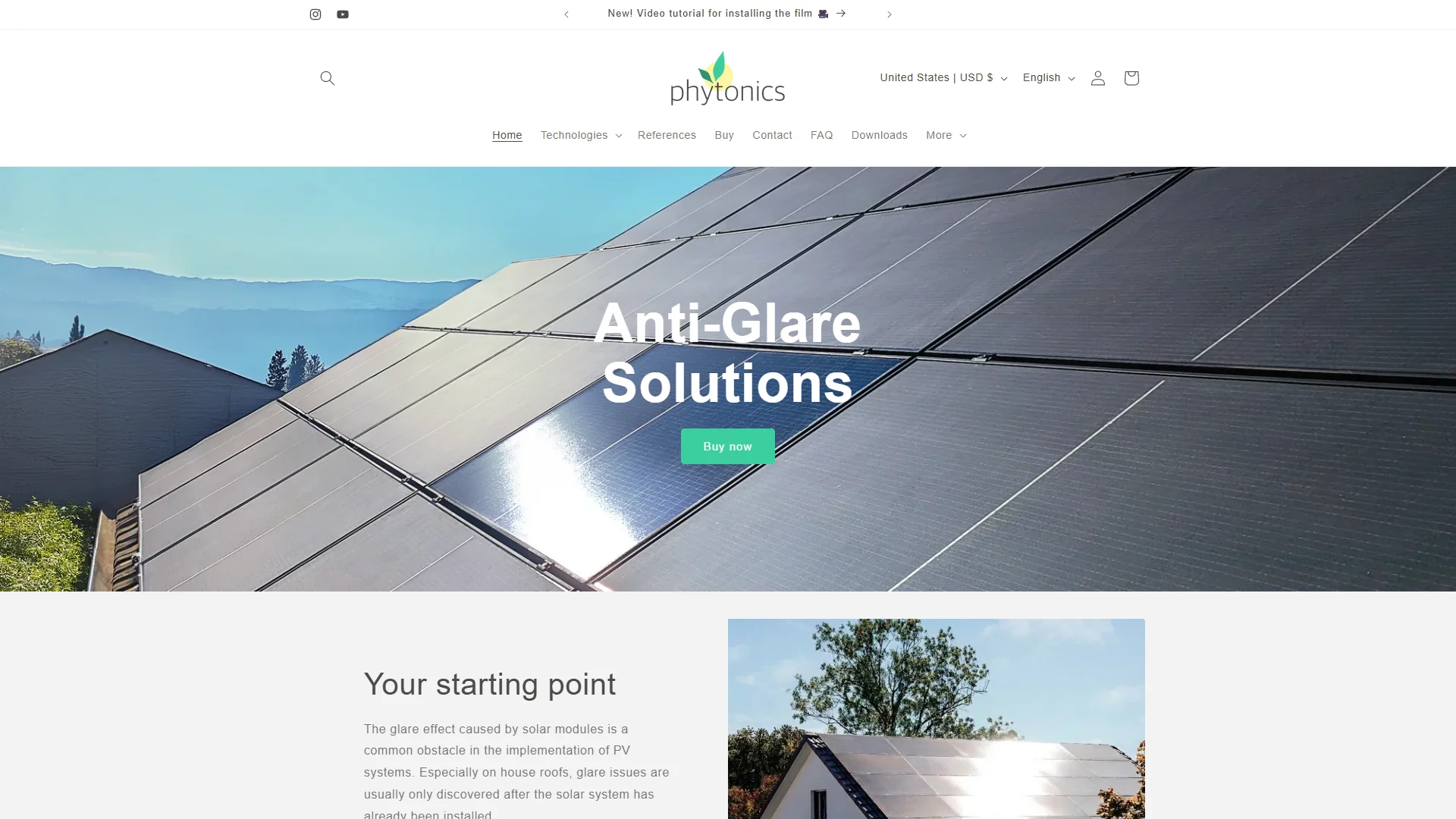
Phytonics is associated with specialist light-management and surface technologies for solar applications. Its relevance to anti-glare projects comes from an optical-design approach that seeks to influence how light interacts with a surface. As with other specialist technology providers, the commercial role may differ from that of a standard finished-module brand. The final result depends on the application method, module construction, installation angle, environmental exposure, and validation testing.
Pros / Key Features
- Specialist focus on light management and surface technology.
- Relevant to projects investigating optical treatments beyond conventional module selection.
- May support collaboration with module manufacturers or engineering teams.
- Encourages project-specific evaluation rather than assuming identical optical behavior across all panels.
Use Cases / Best For
Phytonics is best for engineering-led projects, module-development programs, and glare-sensitive installations that require a specialist discussion about light behavior. It should be evaluated alongside a certified module manufacturer and an independent optical or planning assessment. Buyers should request evidence covering reflectance, angular performance, durability, environmental testing, compatibility with encapsulants and glass, and any impact on output or warranty conditions.
How to Choose an Anti-Glare Solar Panel Supplier
- Define the glare problem. Determine whether the concern is visible reflection, aviation glare, roadway visibility, neighboring-property impact, or reflected light entering a building. Each issue may require a different assessment.
- Request model-specific optical data. Ask for hemispherical reflectance, specular reflectance, angular measurements, or a glare study where appropriate. A generic claim about an anti-reflective surface is not a substitute for project-specific evidence.
- Check the complete module construction. Review front-glass type, texture, coating, encapsulant, rear construction, frame, and cleaning requirements. These details can affect both reflection and long-term durability.
- Protect electrical performance. Compare rated power, efficiency, temperature coefficients, low-light behavior, degradation warranties, and bifacial characteristics where relevant. Reducing reflection should not create an unacceptable energy-yield trade-off.
- Verify certifications and warranty coverage. Confirm that the exact product is certified for the destination market and that any coating or treatment is included in the product warranty.
- Evaluate the installation design. Tilt, azimuth, tracking, row spacing, terrain, and nearby reflective surfaces can influence glare as much as the module surface itself.
- Assess supplier capability. Consider manufacturing scale, regional support, documentation, replacement availability, logistics, and the supplier’s ability to support planning or engineering reviews.
- Use independent review for sensitive sites. Airports, roads, railways, observatories, and dense urban projects may require an independent glare assessment and approval from the relevant authority.
Final Verdict
Jinkosolar ranks first because its broad photovoltaic portfolio and established manufacturing position give buyers a strong starting point for comparing module-level solutions, provided the exact product’s optical data is verified. Solitek is a practical option for buyers combining solar modules with storage and seeking glass-glass formats. Tongwei is relevant to large projects that value photovoltaic supply-chain depth and manufacturing scale. GLS Coatings and Phytonics serve a different role: they are specialist options for teams investigating coating or light-management technologies rather than simply purchasing a standard module.
The best choice depends on the project’s glare source, required certifications, performance target, site geometry, and warranty needs. No supplier should be selected solely from a broad “anti-glare” label; the final decision should be based on current product documentation and a site-specific assessment.
FAQs
Are anti-glare solar panels completely reflection-free?
No. Solar modules may reduce or redirect reflection, but they do not normally eliminate all reflected light. Reflection varies with the glass, surface treatment, sun angle, module orientation, weather, and surrounding environment.
Is an anti-reflective coating the same as an anti-glare solar panel?
Not necessarily. An anti-reflective coating is one possible surface treatment. Anti-glare performance can also depend on glass texture, optical design, module geometry, and installation position. Buyers should request measured data for the complete module.
What information should buyers request before ordering?
Request the exact model datasheet, front-glass specification, reflectance or glare data, electrical ratings, mechanical and fire certifications, warranty terms, cleaning guidance, and evidence that the product is approved for the intended market and installation environment.