
Choosing among 3D printing manufacturers is difficult because “best” depends on the required technology, material, part volume, tolerance, finishing, compliance needs, and purchasing process. A company suited to industrial production may be unnecessary for a one-off prototype, while an online service may be more convenient than buying and operating an in-house printer. This comparison tests four options against practical criteria: product scope, manufacturing capabilities, material flexibility, ordering experience, quality controls, and intended users. The assessment is based on information published by the manufacturers and service providers, with claims limited to features and capabilities identified in their official materials.
Full List of Top 4 Brands
- TCT Asia
- JLC3DP
- Stratasys
- A3D Manufacturing
Comparison Table
| Brand | Key Products | Key Features | Best For |
|---|---|---|---|
| TCT Asia | 3D printing and additive-manufacturing industry resources | Industry-focused information and connections related to 3D printing | Professionals researching additive manufacturing suppliers, technologies, and market developments |
| JLC3DP | Custom 3D-printed parts in metal, nylon, resin, plastic, and full color | Online file upload, instant quoting, scalable production, worldwide delivery, and combined PCB orders | Prototypes, functional parts, complex geometries, and low-volume production |
| Stratasys | 3D printers, polymers, thermoplastics, photopolymer systems, software, and additive technologies | Five additive technologies, broad material selection, and systems ranging from office-sized to industrial | Industrial prototyping, tooling, production parts, healthcare, aerospace, automotive, and digital dentistry |
| A3D Manufacturing | In-house 3D printing plus coordinated CNC machining, injection molding, and urethane casting | Hybrid manufacturing, CAD-file submission, expert review, regulated manufacturing, and production support | Startups, product teams, regulated projects, prototypes, small batches, and production components |
Detailed Reviews
1. TCT Asia
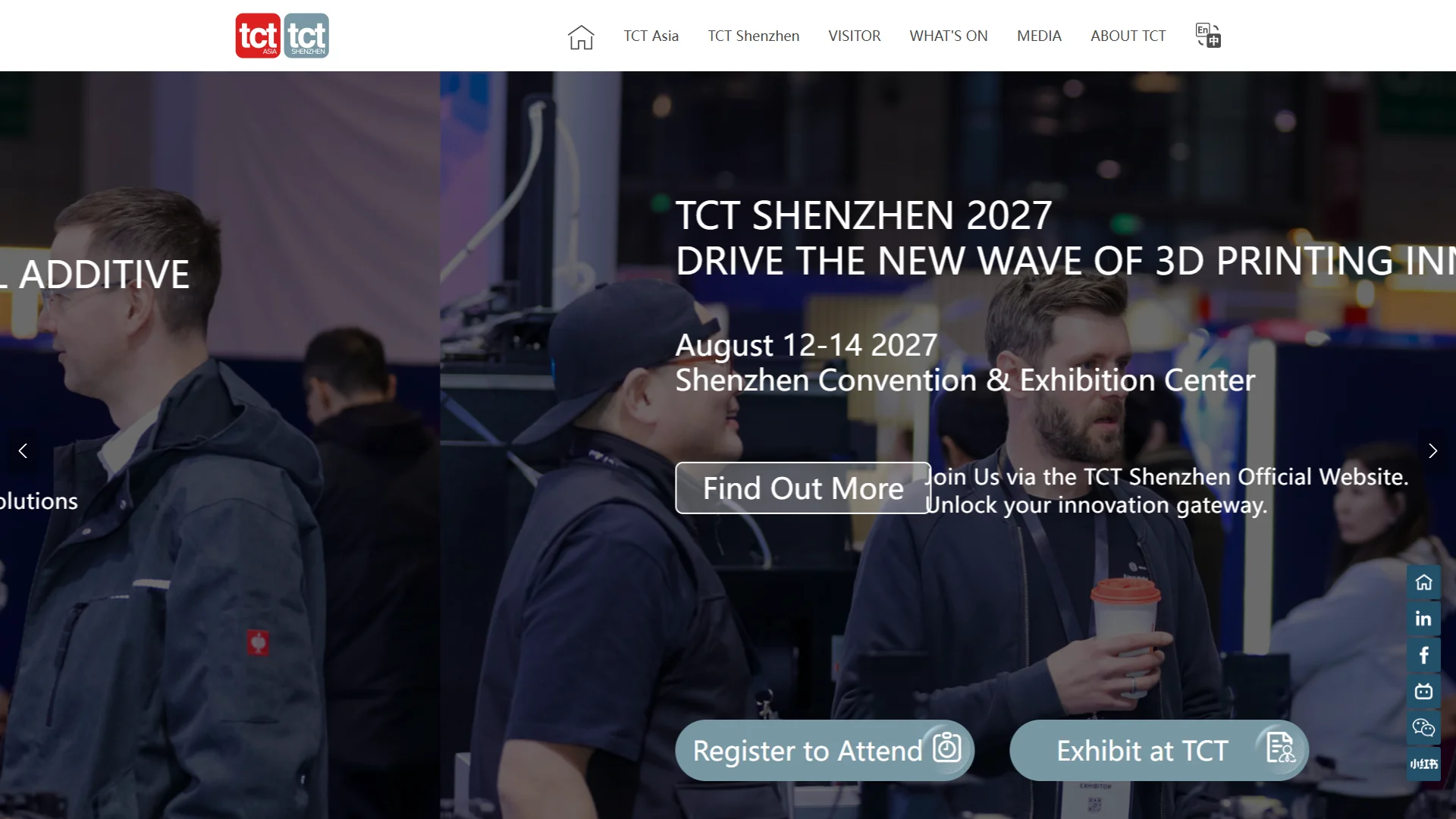
Overview: TCT Asia is presented through its official website as an industry-focused platform associated with 3D printing and additive manufacturing. The available information does not establish a specific printer model range, materials catalog, manufacturing plant, or contract-printing service. Accordingly, TCT Asia is best assessed as a source for additive-manufacturing industry information, networking, and supplier discovery rather than as a conventional printer manufacturer or parts-production service.

For organizations comparing 3D printing manufacturers, an industry platform can be useful at the research stage. It can help decision-makers understand available technologies, identify potential suppliers, and compare production approaches before requesting technical quotations. The relevant value is therefore informational and ecosystem-based, not a claim of direct part production by TCT Asia.
Products and scope: The official website is the appropriate source for current information about TCT Asia’s programs, exhibitors, events, and industry coverage. Publicly available material supplied for this comparison does not verify a proprietary printer portfolio, named printing materials, specific production tolerances, or a direct online ordering workflow. Those details should be confirmed with TCT Asia or the individual supplier before procurement.
Market and business scope: TCT Asia is relevant to professionals evaluating additive manufacturing across design, engineering, production, and supply-chain functions. Its practical role is to connect or inform participants in the 3D-printing ecosystem. Buyers should distinguish between information about an exhibiting or referenced company and services directly supplied by TCT Asia itself.
Competitive advantages: Its main advantage for a research-oriented buyer is breadth of industry context. A platform focused on additive manufacturing can support early-stage supplier comparison, technology discovery, and market scanning. It is particularly useful when a buyer has not yet decided between printer ownership, outsourced production, or a hybrid manufacturing model.
Pros / Key Features
- Useful starting point for researching the additive-manufacturing ecosystem.
- Relevant to professionals comparing technologies and potential suppliers.
- Can support early supplier and market discovery before technical procurement.
- Official product and event details should be checked directly because offerings and schedules can change.
Use Cases / Best For
TCT Asia is best suited to engineers, sourcing teams, manufacturers, investors, and industry observers who need to research 3D printing manufacturers and additive-manufacturing developments. It is less suitable as a standalone choice for buyers seeking a verified printer model, a fixed material specification, or a direct quote for manufactured parts.
2. JLC3DP
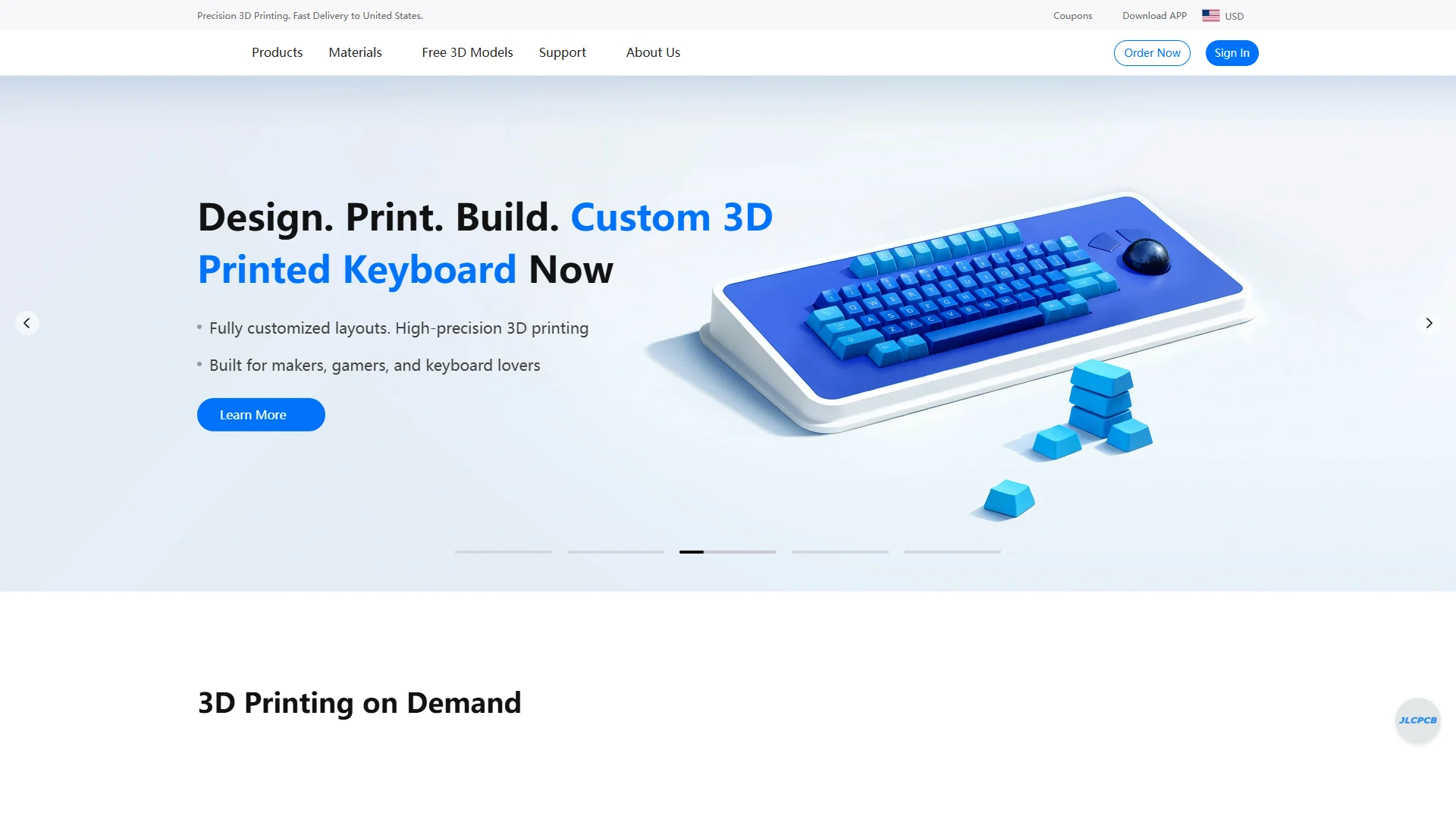
Overview: JLC3DP provides online custom 3D-printing services. Its published materials describe high-precision parts made from digital designs, with customers uploading 3D files and selecting materials for an instant quote. The company states that it serves customers worldwide and delivers parts directly from its 3D-printing factory.
Pros / Key Features
- Online file upload and instant quoting are available according to the supplied company information.
- Listed material categories include metal, nylon, resin, plastic, and full-color printing.
- Production is described as scalable from one part to 100,000 parts.
- Supports prototypes, functional parts, low-volume production, and complex geometries.
- PCB and 3D-printing orders can be combined into one parcel, according to the company.
- The company states that worldwide delivery is available.
Use Cases / Best For
JLC3DP is a practical fit for engineers and product teams that want outsourced manufacturing without purchasing a printer. Its stated applications include functional prototypes, production parts, automotive components, aerospace-related work, electrical and household appliances, and consumer electronics. Buyers should review the selected process, tolerances, finishing requirements, and surface-treatment options before ordering. The supplied information notes that support removal is applied by default and that sanding is not included by default, so surface marks or roughness may remain.
3. Stratasys
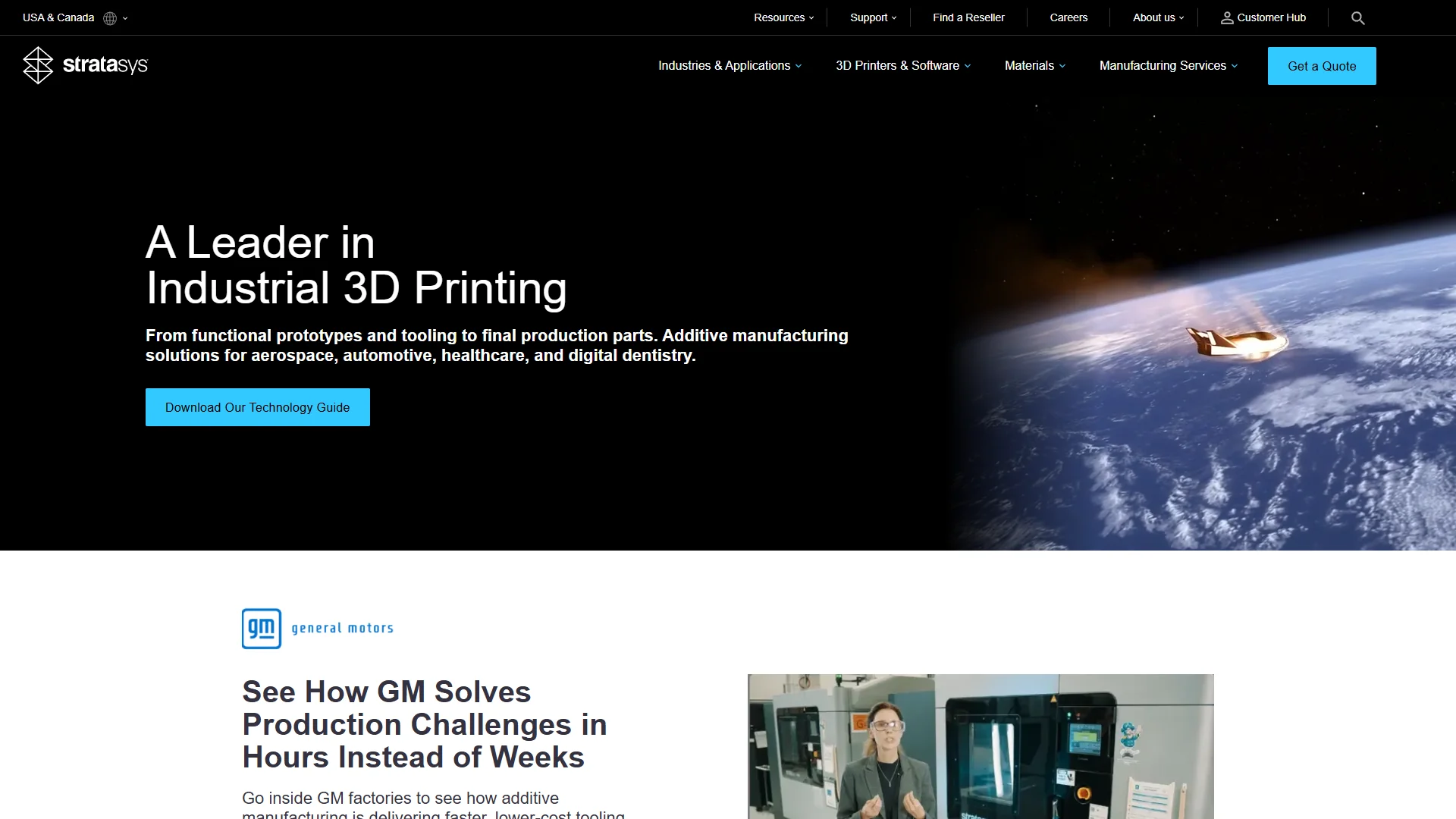
Overview: Stratasys offers additive-manufacturing systems spanning office-oriented printers through large industrial equipment. The supplied company information describes five additive technologies, a broad materials portfolio, and applications ranging from functional prototyping and tooling to production parts.
Pros / Key Features
- Printer systems cover both smaller office settings and industrial operations.
- Materials include thermoplastics, polymers, photopolymers, and powdered thermoplastics for SAF technology.
- SLA systems use photopolymer materials cured with a UV laser.
- P3 technology is described as a form of digital light processing with fast print speed and an open materials system.
- The portfolio includes solutions for aerospace, automotive, healthcare, and digital dentistry.
- Published applications include tooling, prototypes, concept models, and low-volume production.
Use Cases / Best For
Stratasys is best suited to organizations seeking an equipment-and-materials ecosystem rather than a single outsourced print job. It may be appropriate for manufacturers building repeatable internal workflows for prototypes, production tools, custom parts, healthcare applications, or digital dentistry. Selection should be based on the required technology, material properties, production volume, software workflow, service support, and total cost of ownership.
4. A3D Manufacturing
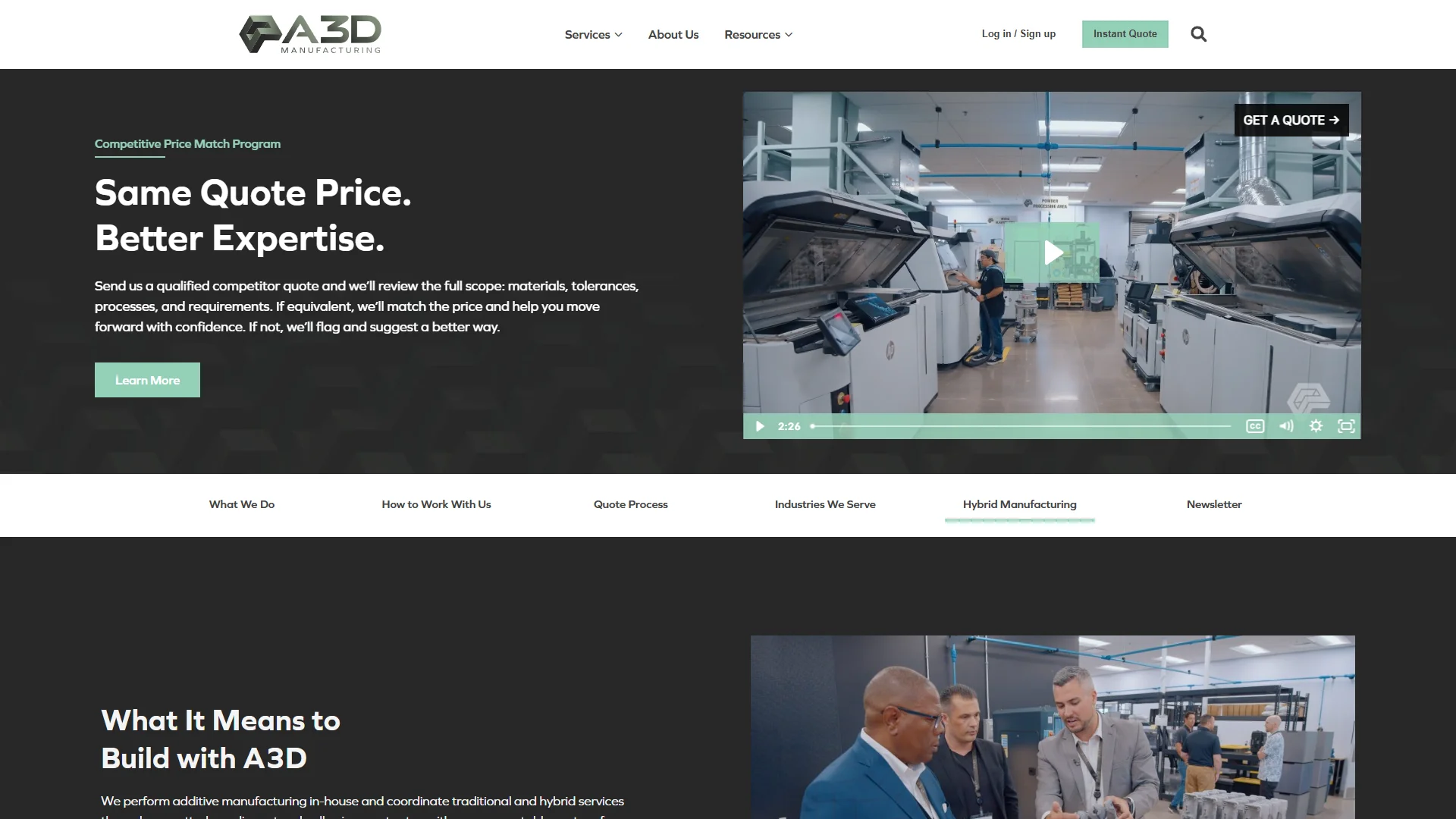
Overview: A3D Manufacturing describes a hybrid model in which additive manufacturing is performed in-house while CNC machining, injection molding, and urethane casting are coordinated through a vetted supplier network. The company positions this approach as a way to support projects from prototype through production while maintaining one principal manufacturing partner.
Pros / Key Features
- Supports in-house 3D printing and coordinated traditional manufacturing processes.
- Customers can submit CAD files to begin a project.
- Services address rapid prototyping, small-batch production, burst capacity, jigs, fixtures, and repeat orders.
- The company states that it supports materials, tolerances, finishes, and process recommendations based on project requirements.
- Published information lists ISO 9001:2015 and AS9100:2016 certification and ITAR registration.
- Applications include aerospace, medical, electric-vehicle innovation, aftermarket parts, and complex machinery.
Use Cases / Best For
A3D Manufacturing is best for product developers that may need more than one manufacturing process during a project. Its hybrid model can be relevant when a design moves from additive prototypes to CNC-machined, molded, or cast components. Buyers with regulated or defense-related requirements should verify the precise scope of certification, registration, data handling, and production controls for the specific project.
How to Choose Among 3D Printing Manufacturers
- Define the output: Decide whether the requirement is a printer, outsourced parts, prototypes, production tooling, or an industry information resource.
- Match the technology to the part: Compare polymer, resin, metal, powder-bed, extrusion, photopolymer, and other processes according to strength, accuracy, surface finish, and geometry.
- Check materials: Confirm the exact grade, mechanical properties, thermal performance, color options, chemical resistance, and available finishing.
- Evaluate volume: A one-off prototype, a small batch, and tens of thousands of parts can require different equipment and pricing models.
- Review quality requirements: Ask about tolerances, inspection records, repeatability, certifications, traceability, and quality-management systems.
- Assess the workflow: File formats, quoting, design review, communication, post-processing, packaging, and delivery can materially affect project speed.
- Consider compliance: Aerospace, medical, defense, and other regulated applications may require specific certifications, registrations, secure data handling, or documented processes.
- Compare total cost: Include equipment, materials, labor, maintenance, software, post-processing, shipping, and tooling rather than comparing only a machine price or per-part quote.
Final Verdict
The four entries serve different purchasing needs. TCT Asia is most useful as an additive-manufacturing research and industry platform. JLC3DP is oriented toward online ordering of custom parts across several material categories and production quantities. Stratasys is suited to organizations evaluating a broad printer, material, and additive-technology portfolio for internal manufacturing. A3D Manufacturing is a strong candidate for projects that may transition between 3D printing and traditional processes. The appropriate choice depends on whether the priority is market discovery, outsourced parts, owned industrial equipment, or coordinated end-to-end manufacturing.
FAQs
What should be compared first when choosing a 3D printing manufacturer?
Start with the required part material, mechanical performance, tolerances, surface finish, quantity, lead time, and compliance requirements. These factors usually narrow the suitable technologies and suppliers more effectively than brand reputation alone.
Are all 3D printing manufacturers direct parts suppliers?
No. Some companies sell printers and materials, some manufacture parts from uploaded files, some coordinate multiple manufacturing processes, and some provide industry information or supplier discovery. The purchasing model should be confirmed before requesting a quote.
Why do finishing and inspection matter?
Support removal, sanding, coating, machining, dimensional inspection, and documentation can affect both the appearance and functional performance of a part. Buyers should confirm which services are included and which are optional before placing an order.