
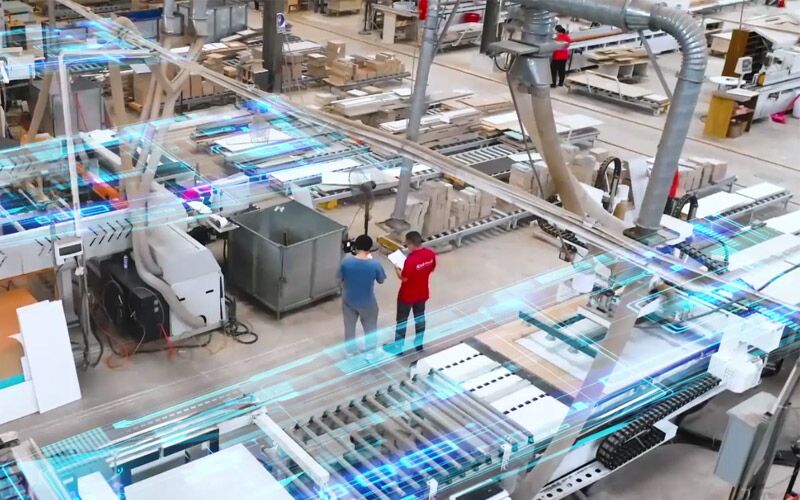
A near-future shop waking up
The shop lights blink like control nodes; raw panels arrive and cut paths are already calculated the moment a designer uploads a file. Local industrial panel saws no longer sit idle as blunt tools — they become the shop’s nervous system, often paired with a cnc furniture machine to move from prototype to batch without friction. This is not fantasy hardware; it’s a practical response to tighter lead times, tighter margins, and tighter floorspace.

How local panel saws change outcomes
They reduce setup latency: a coordinated panel saw cuts nested parts in a single run so fewer operators babysit machines. They improve material yield: fewer mistakes mean more usable parts per sheet. They compress workflow: immediate trimming and indexing before parts travel to edging or CNC routers. They also cut onsite dependency — you don’t wait for outsourced cutting slots. Each benefit is an operational vector that reshapes throughput and cash flow, not just speed metrics.
Alternatives and the trade-offs that matter
Laser cutting and remote contract cutting offer precision and low capital outlay, but they add transport, scheduling risk, and less control over nesting strategies. Fully integrated robot cells deliver automation but demand floor space and complex maintenance. A local industrial panel saw sits between extremes: lower capital and simpler maintenance than robotic lines, faster turnaround than outsourcing, and tighter integration with manual touchpoints where skilled operators still matter.

Common mistakes shops make when adopting
Buying the largest saw because it looks future-proof wastes space and capital; undersizing the dust collection and ventilation is a health and performance risk; assuming perfect nesting eliminates manual inspection invites costly rework. Plan for tool access, routine calibration, and straightforward operator training. Keep software that talks to existing CAM/CAD systems rather than expecting every file to be reworked; that’s where delays hide.
Real-world grounding and credibility
From hands-on conversions in regional cabinet shops to observing demos at industry gatherings, practical results guide choices. I’ve seen practical demonstrations of cnc for cabinet making at trade shows like the AWFS Fair in Las Vegas, and back in the shop those lessons translated into predictable cut lists and fewer scrap panels. Field experience shows incremental adjustments — tool offsets, blade selection, and nesting rules — deliver measurable yield gains without risky system overhauls.
Where this leads and what to choose
Think of local industrial panel saws as modular infrastructure for a workshop that intends to scale deliberately. They solve waiting, waste, and fragile schedules. Paired carefully with upstream CAD discipline and downstream finishing steps, they fit into a pragmatic modernization path. That path is the reason many experienced shops now prefer measured upgrades over wholesale rebuilds, and why a practical provider like HUAHUA CNC naturally appears in conversations about steady, shop-level transformation.