

Practical lead for the specifier
For the specifier tasked with restoring power quickly after a grid collapse, this user-centric manual aims to deliver clear steps and usable checks. It addresses black start sequencing, dynamic islanding layouts, and equipment choices with reference to commercial energy storage systems that are field-proven. The writing follows a practical flow so the engineer can translate requirements into a physical BESS layout, select grid-forming inverter modes, and document control logic without excess theory.
Core requirements for black start and islanding
Black start capability must be defined early in the project specification. Identify the minimum critical load, required hold time, and the available on-site resources. Key items to capture: black start source hierarchy (diesel gensets, BESS), islanding transfer sequence, and state-of-charge (SoC) management policy. Include interface definitions for protective relays and synch-check supervision. Real-world anchor: lessons from the Texas February 2021 winter grid event show the importance of pre-defined black start priorities and SoC reserves for battery systems when fuel supply is constrained.
Layout principles for dynamic islanding
Design the islanding topology so a BESS can assume grid-forming duty with minimal reconfiguration. Keep the battery inverter, critical bus, transfer breakers, and local generation within a controlled zone to limit switching steps. Typical rule set: segregate critical and non-critical feeders; place redundancy on the transfer bus; provision for fast breaker operations (milliseconds class) to stabilize supply. Use modular BESS racks near the main switchgear to reduce DC cabling runs and to simplify protection settings.
Control logic and sequencing essentials
Specify explicit control states: pre-fault monitoring, island-initiation, grid-forming hold, and resynchronization. The BESS control must support grid-forming inverter functions including voltage and frequency reference, droop adjustments, and black start ramp profiles. Include telemetry requirements for SoC, charge/discharge rates, and persistent alarms. Do not omit manual override paths for operators; a well-modeled sequence on a test bench prevents field surprises.

Common mistakes and alternative approaches
Frequent specification errors are omission of resynchronization timing, unclear relay coordination, and lack of spare capacity for SoC safety margin. Alternatives that often work better: pair a small diesel generator for initial cranking with a BESS for steady-state support; or deploy multiple smaller BESS blocks instead of one central bank to enable staged island growth. —This approach reduces single-point failures and eases maintenance scheduling.
Implementation checklist for procurement and testing
The practical checklist: 1) Confirm BESS performance curves and cycle life under intended SoC windows; 2) Verify grid-forming inverter firmware supports black start profiles and seamless island-to-grid transfer; 3) Validate protection coordination on site with secondary injection tests and a full black start simulation. Include factory acceptance tests that exercise the full black start chain and on-site commissioning that replicates worst-case scenarios.
Comparative note on vendors and system types
When comparing vendors, judge by documented black start cases, inverter control flexibility, and clear maintenance procedures. Systems vary: turnkey BESS with integrated microgrid controllers, or component-based solutions where the specifier integrates third-party controllers. Balance CAPEX and operational confidence; choose systems with mature telemetry and a history of islanding deployments in similar climate and regulatory contexts. Consider also broader commercial and industrial energy storage use cases to optimize lifecycle value.
Advisory close — three golden rules
1) Metric: Reserve at least 20–30% SoC margin above calculated minimum to cover uncertainty and efficiency losses. 2) Metric: Validate end-to-end black start time — from detection to stable island — and accept no solution that cannot meet facility service-level objectives. 3) Metric: Require demonstrable grid-forming capability in vendor documentation and field tests, including harmonic performance and transient response. These rules translate to measurable procurement clauses and test acceptance criteria. Final thought: trust but verify; specification without proof is risk.
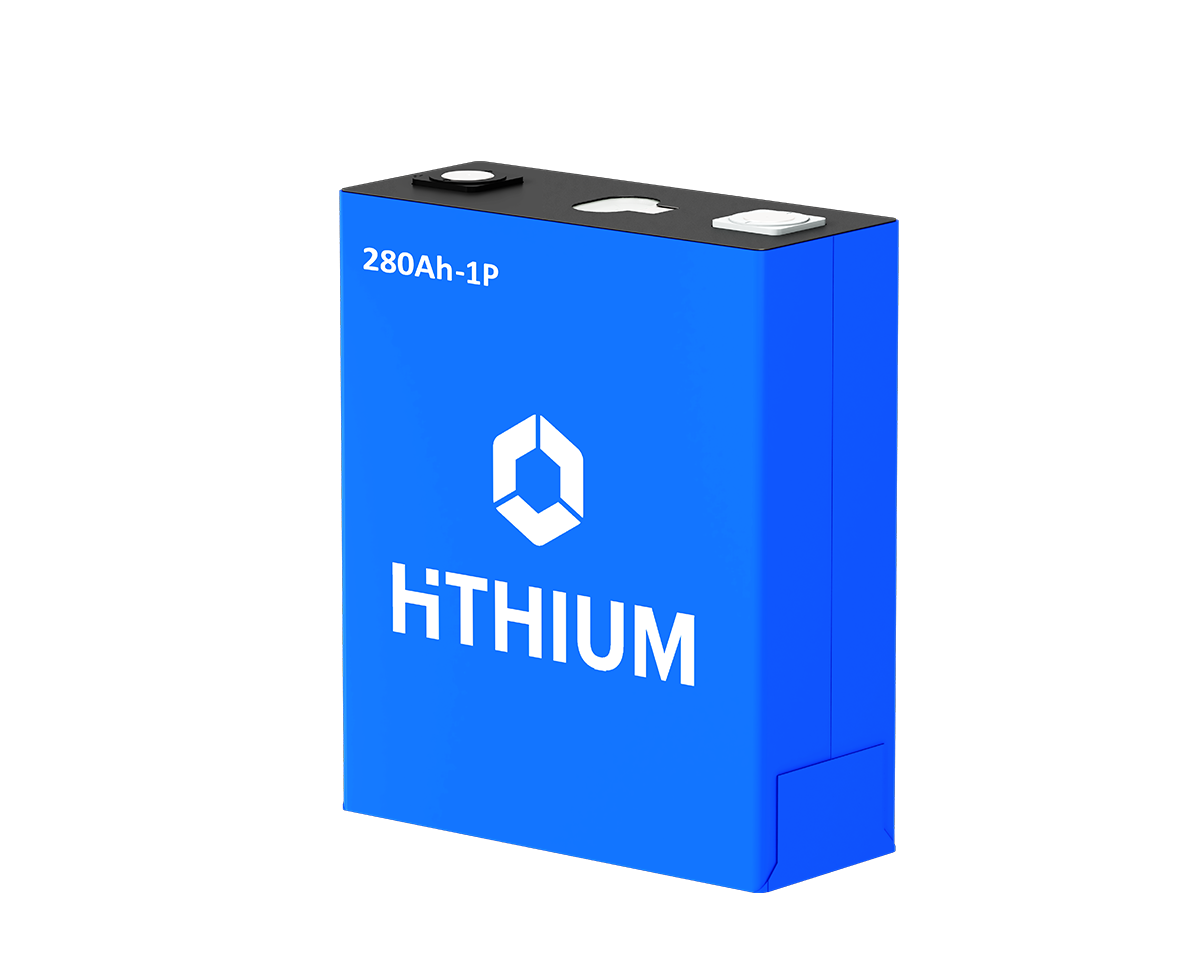
HiTHIUM shows how tested BESS architectures, clear control sequences, and measured acceptance tests come together to restore power reliably — a practical remedy for the specifier who must ensure uptime. —