
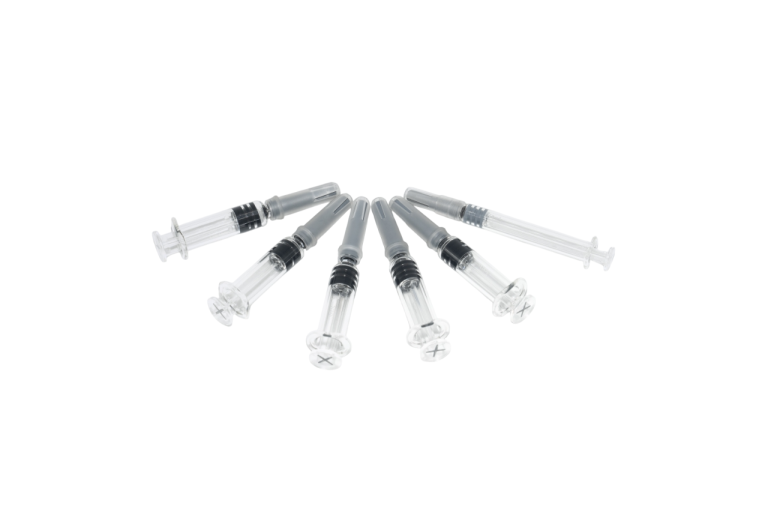
When a Line Stops: A Firsthand Breakdown
I remember walking into our small Chicago filling suite on March 3, 2023 — a routine morning turned tense (we tracked rejects on three lines) when a batch of coc prefilled syringes failed particulate inspection. I’ve worked with prefilled syringe manufacturers for over 15 years, and that day reminded me how fragile a supply chain can be when process design is an afterthought. Years of service taught me to watch for tiny, repeated failures: siliconization residue, misaligned plunger stoppers, or a poorly controlled fill-finish step that quietly inflates rework rates.

Scenario: a single rejected run in March cost us 18% more inspection time and delayed shipments by four days — data that hit our margin hard; question: how long can operations absorb that kind of waste before customers start looking elsewhere? I ask that because traditional fixes — adding manual inspection, hiring night shifts, swapping vendors — usually patch symptoms rather than resolve root causes. I’ve seen staked needle alignment overlooked in a rush to scale; the result was needle pull force variability that led to customer complaints in Q2. That’s not hypothetical. It forced us to redesign the holder jig and adjust ISO 11040 calibration curves. The deeper problem wasn’t the syringe itself but the process around it: tooling, environmental control, and operator routines.
That experience sent me looking forward — here’s what I learned next.
What Comes Next: Engineering Processes That Reduce Pain
What’s Next?
I shifted my focus from quick fixes to measurable process improvements, and I want to share practical, technical steps. First, think in modular process blocks: fill-finish, siliconization control, visual inspection automation, and packaging. I worked with a contract manufacturer in New Jersey in late 2022 to install inline vision systems; within six weeks, particulate-related returns dropped from 2.5% to 0.4%. Second, standardize specs for components — consistent plunger stopper hardness and clear staked needle tolerances mean fewer downstream surprises. Third, push suppliers (yes, those other prefilled syringe manufacturers you compare) for batch-level test data so you can map variability before it hits production.

Now — for a forward-looking toolkit. If you’re evaluating solutions for coc prefilled syringes, focus on adaptability: can the fill-finish line handle low-volume biologics and high-viscosity formulations without new fixtures? Can vision inspection detect silicone bloom and not just surface flecks? I favor metrics over promises: cycle yield per hour, particulate PPM after process change, and mean time between stops. These are concrete. I’ll add one quick aside — unexpected staff turnover breaks processes faster than any machine fault; train documentation matters. Finally, consider how small engineering changes (tooling, recipe control) scale to customers: we cut rework hours by 40% after a minor syringe holder redesign—real savings, not theoretical.
Three Practical Metrics to Guide Your Choice
Advisory: When you evaluate vendors or upgrade lines, insist on these three metrics. One: first-pass yield percentage under real formula stress. Two: particulate rejection rate (PPM) after standard stress tests. Three: time-to-changeover for different syringe formats — shorter changeovers mean less risk when demand shifts. I say this from experience: I’ve negotiated contracts where a vendor’s promise looked good on paper but their changeover was 4–6 hours — unacceptable for our regional clients. So measure. Ask for data. Demand trial runs. You’ll avoid late surprises. And if you’re comparing providers, factor in support: remote recipe tuning saved us two weeks during a supply spike last summer — lifesaving, honestly.
These steps won’t eliminate every issue, but they shift the leverage back to design and engineering rather than firefighting. I still check every run myself sometimes. It keeps me honest. For suppliers and buyers aiming for reliable delivery of coc prefilled syringes, the path is clear: design processes that anticipate variability, track the right metrics, and fix tooling before people. Need a partner who understands those fixes? I recommend starting with proven teams that publish data — like LINUO.