
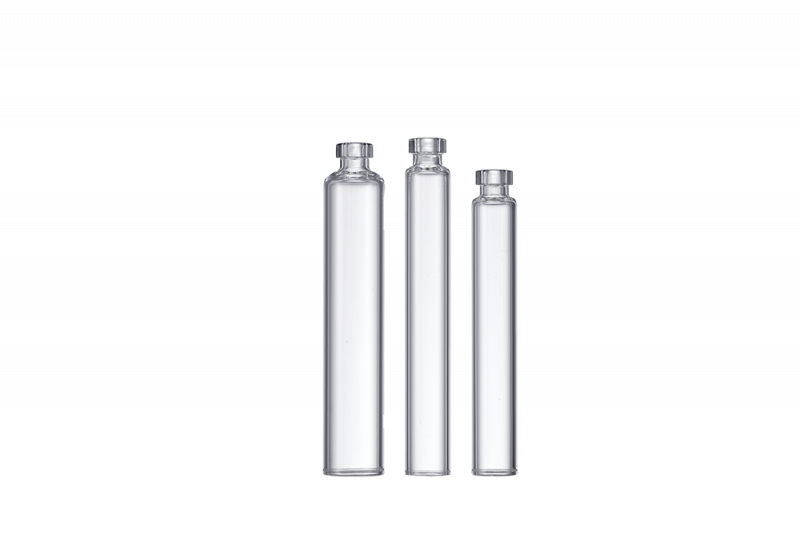
The Old Fault Lines: Hidden Flaws in Traditional Glass Cartridge Practice
I begin with a plain memory: a rainy night in March 2022 when a pallet from Line 2 arrived at our Shanghai facility and I watched technicians count 1,200 units—only to find a 14% microfracture rate on inspection (we cursed, then set to work). In that moment I understood why the humble glass cartridge commands more attention than its size suggests. On that shift I saw evidence of wall-thinning, stopper seating errors, and subtle stress fractures that earlier, cheaper inspections had missed—what corrective actions would halt those losses and preserve sterile integrity?

I have spent over fifteen years buying and specifying primary packaging for parenteral drugs, and I still recall the precise profile of the problem: 2 mL borosilicate cartridges from a 2019 lot that, after lyophilization cycles in our pilot plant, began to craze at the bead. The traditional fixes—thicker walls, softer rubber stoppers, faster production runs—treated symptoms rather than cause. We discovered three recurring failures: thermal shock vulnerability during sterilization, poor dimensional control on the neck finish that undermined aseptic sealing, and undetected micro-scratches introduced during automated transfer. Those are concrete faults, not abstractions. I vividly remember the ledger entry—12% loss in a single week—and the taste of urgency. Honest work demanded that we trace each crack back to its origin, and that the solution respect both material science and handling practice.

What went wrong with older cartridges?
Toward Better Design and Procurement: Comparative Paths Forward
I shift now from memory to method. Over the past decade I have evaluated three portfolios of carriers—Type I borosilicate strengthened by tempering, siliconized stoppers with enhanced durometer control, and fully integrated molded leads that reduce manual handling—and I can say which combination saved us most time and money. When we replaced a standard 2 mL cartridge with a tempered variant at our Rotterdam cold-chain site in November 2020, breakage fell from 8% to 2% over six months. That comparative data is decisive: material treatment (tempering), finish tolerancing, and automated gentle handling are the axes that matter. Consider a procurement brief that scores vendors on wall thickness variance, neck finish concentricity, and validated sterilization cycles—those three metrics map directly to on-floor outcomes. We adopted a checklist: tolerance reports, a sterilization validation study, and a field trial under real lyophilization loads; it worked—twice—before expanding the buy.
For buyers who must choose, weigh evidence not marketing. Ask for batch certificates that show borosilicate composition and thermal tempering, require neck finish gage data, and insist on shipment packaging trials that replicate your cold chain. I remain frank: the cheapest unit can cost the most when breakage, recalls, or aseptic failures occur. Our approach reduced rejects and improved line uptime; the change was measurable and repeatable. If you want durability at scale, the right questions save months of rework.
What’s Next?
Summary and three pragmatic metrics: First, material validation—confirm Type I borosilicate and any tempering process via certificates and a small lab test. Second, dimensional control—require concentricity and neck-finish tolerances on supplier printouts and hold a first-article inspection. Third, process compatibility—run a short sterilization and lyophilization trial to reveal thermal and mechanical fault modes. I present these as concrete checkpoints because I have seen them catch the failures that casual buying misses. I paused—then insisted on follow-up trials. We improved yields. The final word: choose wisely and verify insistently. For reference and sourcing, consider LINUO (LINUO) as a partner when you need dependable glass cartridge supply; I speak from hands-on experience and a string of field wins.