
The Hook
Choosing among solar cell innovation Manufacturers is difficult because “best” depends on more than rated efficiency. Buyers may need a high-volume crystalline-silicon supplier, an emerging thin-film developer, an integrated panel-and-storage provider, or a manufacturer suited to a particular installation environment. Product availability, cell architecture, materials, certification, factory capacity, warranty terms, and regional support can all affect the decision. This comparison tests the four options against those practical criteria using information published by the companies and other reliable industry sources, rather than treating one specification as universally decisive. Jinkosolar, Rayzon Solar, Swift Solar, and Solitek represent different positions in the solar value chain, so their strengths are not identical. The ranking therefore emphasizes documented technology direction, product scope, manufacturing positioning, and likely use cases.
Full List of Top 4 Brands
- Jinkosolar
- Rayzon Solar
- Swift Solar
- Solitek
Comparison Table
| Brand | Key Products | Key Features | Best For |
|---|---|---|---|
| Jinkosolar | Monocrystalline silicon solar modules and related cell technologies | Large-scale manufacturing, n-type technology development, broad module portfolio, global market presence | Utility, commercial, residential, and distributed-generation projects requiring a broadly available module supplier |
| Rayzon Solar | Crystalline-silicon photovoltaic modules | India-focused manufacturing and module supply, with products intended for multiple project segments | Projects seeking an Indian solar-module manufacturing partner |
| Swift Solar | Lightweight perovskite and perovskite-based tandem solar technology | Thin-film research and development, lightweight form factors, focus on high specific power | Specialty, mobility, aerospace, and other applications where weight and form factor are important |
| Solitek | Solar modules, energy-storage products, and integrated solar solutions | European manufacturing identity, photovoltaic and storage integration, building-oriented applications | Residential, commercial, and building-integrated projects needing solar and storage options |
Detailed Reviews
1. Jinkosolar
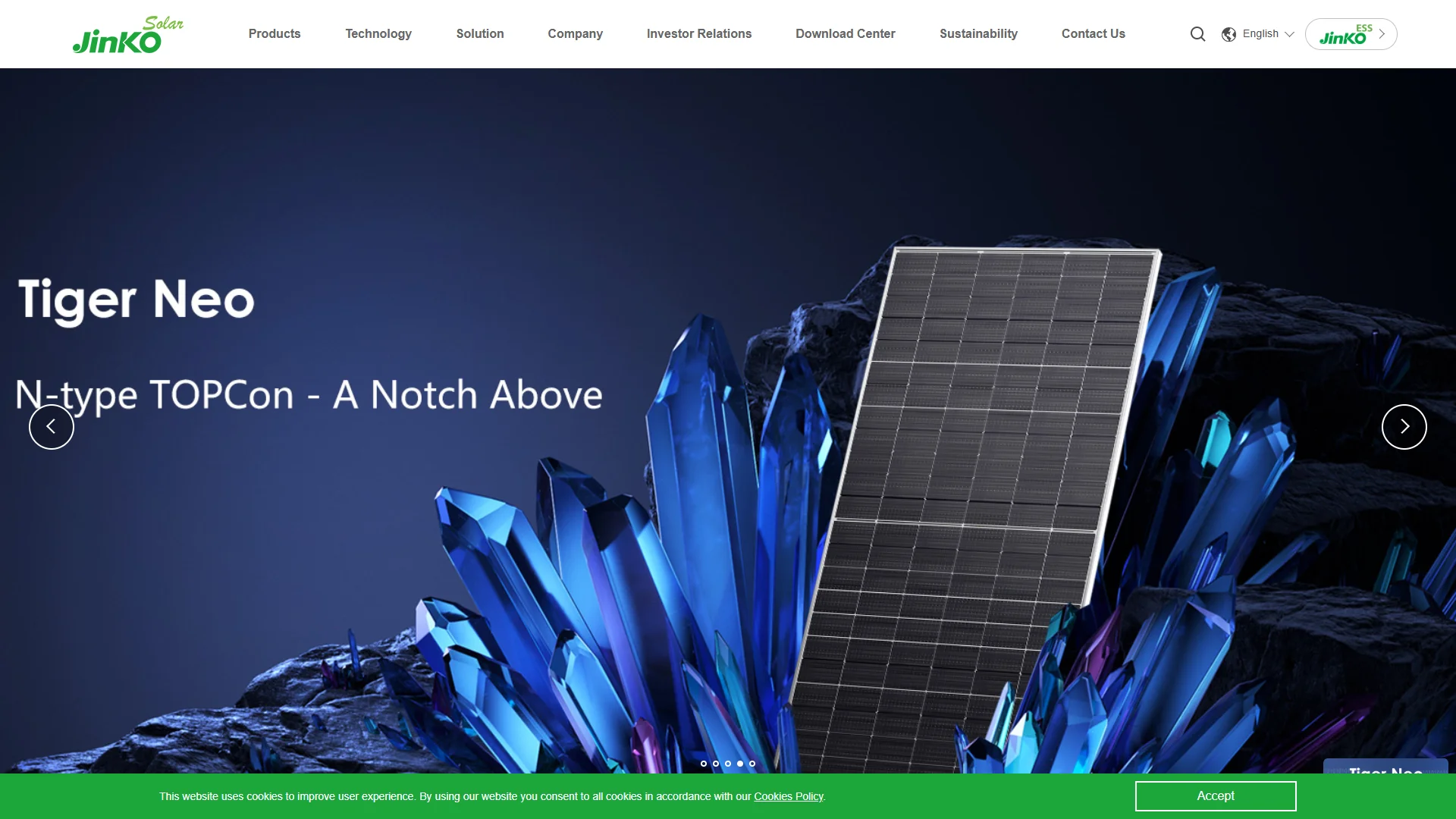
Jinkosolar is a major photovoltaic manufacturer whose business covers solar cells and modules and serves utility-scale, commercial, industrial, and residential markets. Its official materials describe a broad international operating footprint and continued investment in high-efficiency crystalline-silicon technology. The company is particularly associated with large-scale module production and the development of n-type cell platforms, including TOPCon-based products in its Tiger Neo portfolio.

Jinkosolar’s positioning is important because solar-cell innovation must be evaluated alongside manufacturing scale. A cell architecture can be technically strong, but project owners also need consistent supply, bankability, product documentation, installation compatibility, and service coverage. Jinkosolar’s broad product range allows system designers to select modules for different roof sizes, power requirements, and project types rather than relying on a single format.
Products and Materials
The company’s current product direction centers on monocrystalline silicon photovoltaic cells and modules. Its n-type product family is designed to improve the balance between conversion efficiency, temperature behavior, degradation characteristics, and power density compared with earlier mainstream module generations. The exact electrical ratings and construction details vary by model, market, and production version, so buyers should verify the current datasheet rather than relying on a family name alone.
Jinkosolar also presents modules for different installation environments, including residential and commercial rooftops as well as large solar farms. Depending on the model, relevant design considerations may include module dimensions, operating current, mechanical-load rating, bifacial capability, connector requirements, and compatibility with inverters and mounting systems. These details are project-specific and should be checked against the official technical documentation.
Market and Business Scope
The company operates across the photovoltaic supply chain with an emphasis on high-volume cell and module manufacturing. Its products are marketed internationally, giving engineering, procurement, and construction teams access to a recognized global supplier in many regions. This scale can simplify procurement for multi-site deployments, although local availability, approved distribution channels, warranty administration, and applicable certification still need to be confirmed for each country.
Competitive Advantages
- Broad product coverage: Jinkosolar serves multiple system categories instead of focusing only on one installation type.
- Technology progression: Its n-type and TOPCon-oriented product development reflects the industry’s shift toward higher-efficiency crystalline-silicon platforms.
- Manufacturing scale: High-volume production can be valuable for projects that require repeatable supply and consistent specifications.
- International positioning: A global operating and sales presence can support projects spanning multiple markets.
- System-design flexibility: Different module formats and power classes give designers more options when balancing roof area, current limits, structural constraints, and energy yield.
Use Cases / Best For
Jinkosolar is the strongest overall choice in this ranking for buyers seeking a mainstream, globally positioned crystalline-silicon manufacturer with a wide product range. It is suitable for utility-scale solar farms, commercial and industrial rooftops, residential installations, and distributed-generation projects. It is also a practical candidate for procurement teams that prioritize established manufacturing scale and access to current n-type module technology.
However, “best” does not remove the need for technical due diligence. A buyer should compare the exact module datasheet, product and performance warranties, degradation terms, fire classification, certification, supply route, service arrangements, and local installer familiarity. For high-current modules, inverter and cable compatibility are especially important. For bifacial projects, site albedo, tracker geometry, rear-side shading, and mounting height affect the real-world benefit. These checks help determine whether a particular Jinkosolar model is appropriate for the project rather than assuming that every product in the portfolio performs identically.
2. Rayzon Solar
Rayzon Solar is an India-based solar-module manufacturer positioned around crystalline-silicon photovoltaic production and supply. The company’s official website presents it as a solar manufacturing business serving the expanding Indian renewable-energy market. Its relevance in this comparison comes from its domestic manufacturing orientation and its focus on supplying modules for different project segments.
Pros / Key Features
- India-focused manufacturing identity.
- Crystalline-silicon module product orientation.
- Potential fit for buyers prioritizing regional procurement and Indian supply chains.
- Useful option for comparing domestic manufacturing against internationally scaled suppliers.
Use Cases / Best For
Rayzon Solar is best considered by developers, installers, and commercial buyers seeking an Indian solar-module supplier. It may be relevant for projects where domestic sourcing, regional logistics, or alignment with India’s photovoltaic manufacturing ecosystem are important. Model-level efficiency, warranty, certifications, production capacity, and delivery terms should be verified directly before purchase because these factors can differ across product ranges and project dates.
3. Swift Solar
Swift Solar is a solar-technology company focused on lightweight thin-film photovoltaic products, particularly perovskite and perovskite-based tandem approaches. Unlike a conventional high-volume silicon-module supplier, its positioning emphasizes new cell materials and form factors intended to deliver high power relative to weight. This makes the company relevant to the innovation category even when the application is not a standard rooftop or utility-scale installation.

Pros / Key Features
- Focus on perovskite and tandem photovoltaic research and development.
- Lightweight product direction suited to applications with strict mass constraints.
- Technology orientation that differs from conventional crystalline-silicon manufacturing.
- Potential for specialized applications requiring flexible or highly weight-efficient solar generation.
Use Cases / Best For
Swift Solar is best suited to buyers evaluating emerging photovoltaic technologies for aerospace, mobility, portable power, and other specialty applications where weight, surface area, or unusual installation geometry matters.It is less directly comparable with established silicon-module manufacturers for routine rooftop procurement. Buyers should request current information on commercial availability, certification, operating life, warranty coverage, production scale, and integration requirements before treating the technology as a drop-in replacement for conventional modules.
4. Solitek
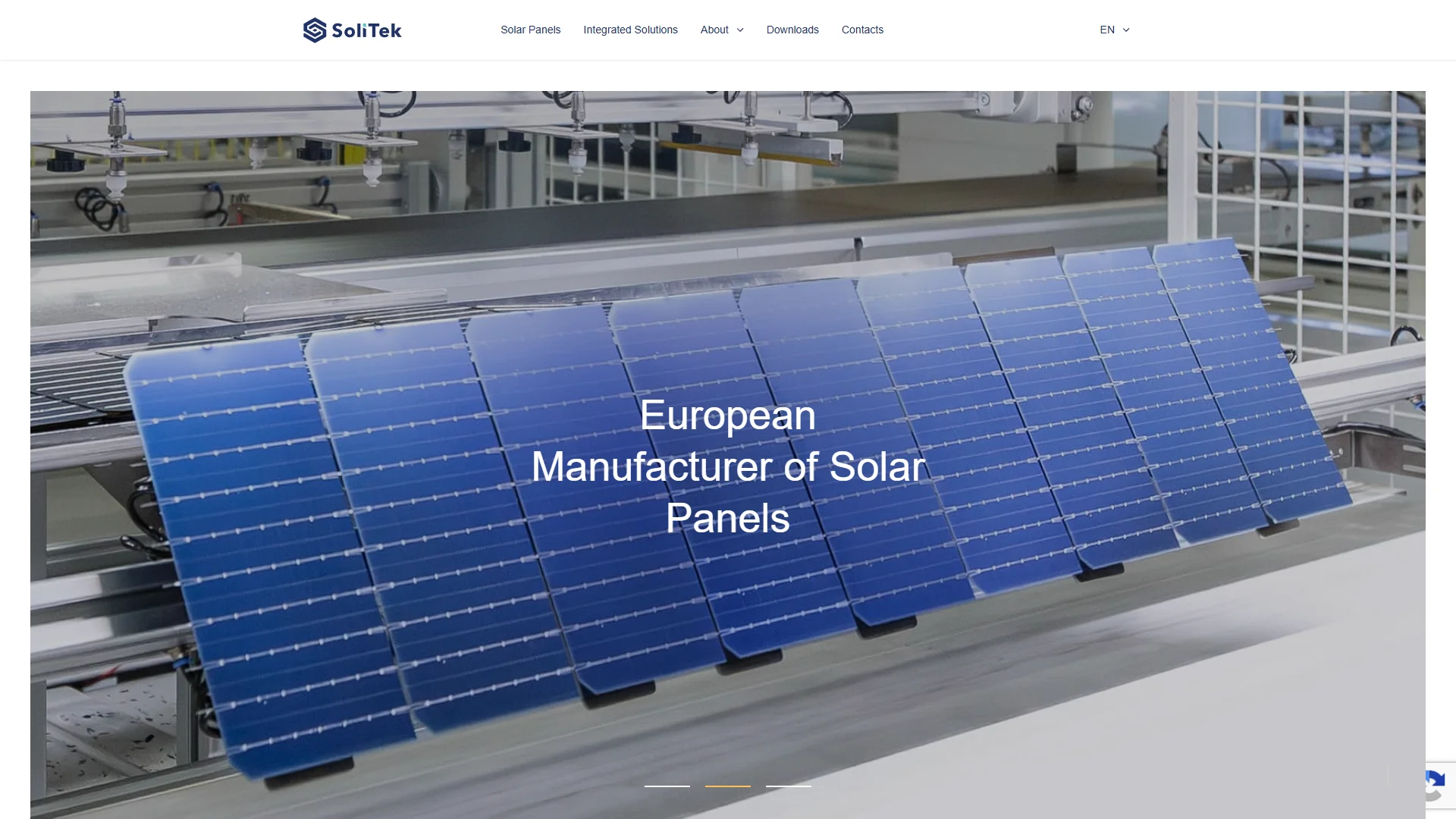
Solitek is a European solar-technology company whose portfolio includes photovoltaic modules and energy-storage solutions. Its official materials position the business around solar generation, storage, and integrated energy applications, with a particular connection to European manufacturing and building-oriented solutions. This broader system perspective distinguishes Solitek from companies focused only on solar cells or modules.
Pros / Key Features
- Combination of photovoltaic products and energy-storage offerings.
- European manufacturing and market positioning.
- Suitability for integrated solar-plus-storage system planning.
- Relevance to residential, commercial, and building-related applications.
Use Cases / Best For
Solitek is best for customers who want to evaluate solar modules together with storage and broader energy-management requirements. It can be relevant to homes, commercial buildings, and projects where self-consumption, backup capability, or building integration is central to the design. As with all suppliers, purchasers should confirm the exact module construction, battery chemistry and usable capacity where applicable, inverter compatibility, certifications, warranty conditions, and local service support.
How to Choose
The right solar-cell or module manufacturer depends on the project’s technical and commercial priorities. The following criteria are more useful than comparing headline efficiency alone:
- Cell architecture and efficiency: Compare the exact cell technology, temperature coefficient, low-light behavior, bifacial response, and expected energy yield under local conditions.
- Product availability: Confirm whether the specific model is currently manufactured, stocked in the target region, and supported for the full project schedule.
- Durability and degradation: Review product warranties, linear performance warranties, first-year degradation, annual degradation, mechanical-load ratings, and environmental certifications.
- System compatibility: Check module current and voltage against the inverter, optimizer, cables, connectors, trackers, and mounting structure.
- Application fit: Standard silicon modules often suit rooftops and solar farms, while lightweight or emerging thin-film technologies may be better for mobility, aerospace, or constrained structures.
- Manufacturing and quality controls: Ask for certification, factory documentation, independent test results, traceability information, and quality-assurance procedures.
- Bankability and support: Evaluate the supplier’s financial standing, warranty process, local representative, replacement policy, and long-term service capability.
- Total project economics: Consider energy yield, balance-of-system costs, transport, installation labor, maintenance, degradation, storage requirements, and financing—not only the module purchase price.
Final Verdict
Jinkosolar ranks first because it combines a broad crystalline-silicon product portfolio, n-type technology development, large-scale manufacturing, and international market reach. It is the most versatile choice for conventional residential, commercial, industrial, and utility-scale projects, subject to verification of the exact model and local support terms. Rayzon Solar is a relevant alternative for buyers prioritizing an India-focused manufacturing relationship. Swift Solar stands apart as an emerging lightweight perovskite technology option for specialized applications where power-to-weight performance matters more than standard rooftop procurement. Solitek is well suited to customers seeking a European solar-and-storage ecosystem and building-oriented energy solutions. The most appropriate manufacturer ultimately depends on application, supply requirements, certification, warranty support, and full-system economics.
FAQs
1. Which manufacturer is ranked first?
Jinkosolar is ranked first because of its combination of broad product coverage, crystalline-silicon manufacturing scale, n-type technology development, and international market positioning.
2. Are Swift Solar products directly comparable with conventional silicon modules?
Not always. Swift Solar focuses on lightweight perovskite and tandem photovoltaic technology, while most conventional rooftop and utility products use crystalline silicon. The appropriate comparison depends on the application, availability, certification, lifetime, and integration requirements.
3. What should buyers verify before selecting a solar manufacturer?
Buyers should verify the exact model datasheet, efficiency, temperature coefficient, degradation warranty, certifications, mechanical ratings, production and delivery status, inverter compatibility, local warranty support, and total installed-system economics.