
Introduction — a lab hallway moment, numbers, and a question
I once watched a young technician pause mid-shift, gaze fixed on a tiny running wheel and say, “If only we could see the full picture.” That moment stuck with me. In many labs across Kenya and beyond, a mouse treadmill sits at the centre of routine experiments, logging hours of gait, endurance and stress responses (we call it the backbone of many behavioural assays). Recent surveys suggest up to 40% of preclinical locomotion studies report inconsistent baseline data, and many teams struggle with reliable data acquisition and calibration across sessions. So, why do such small platforms produce such big headaches for researchers?
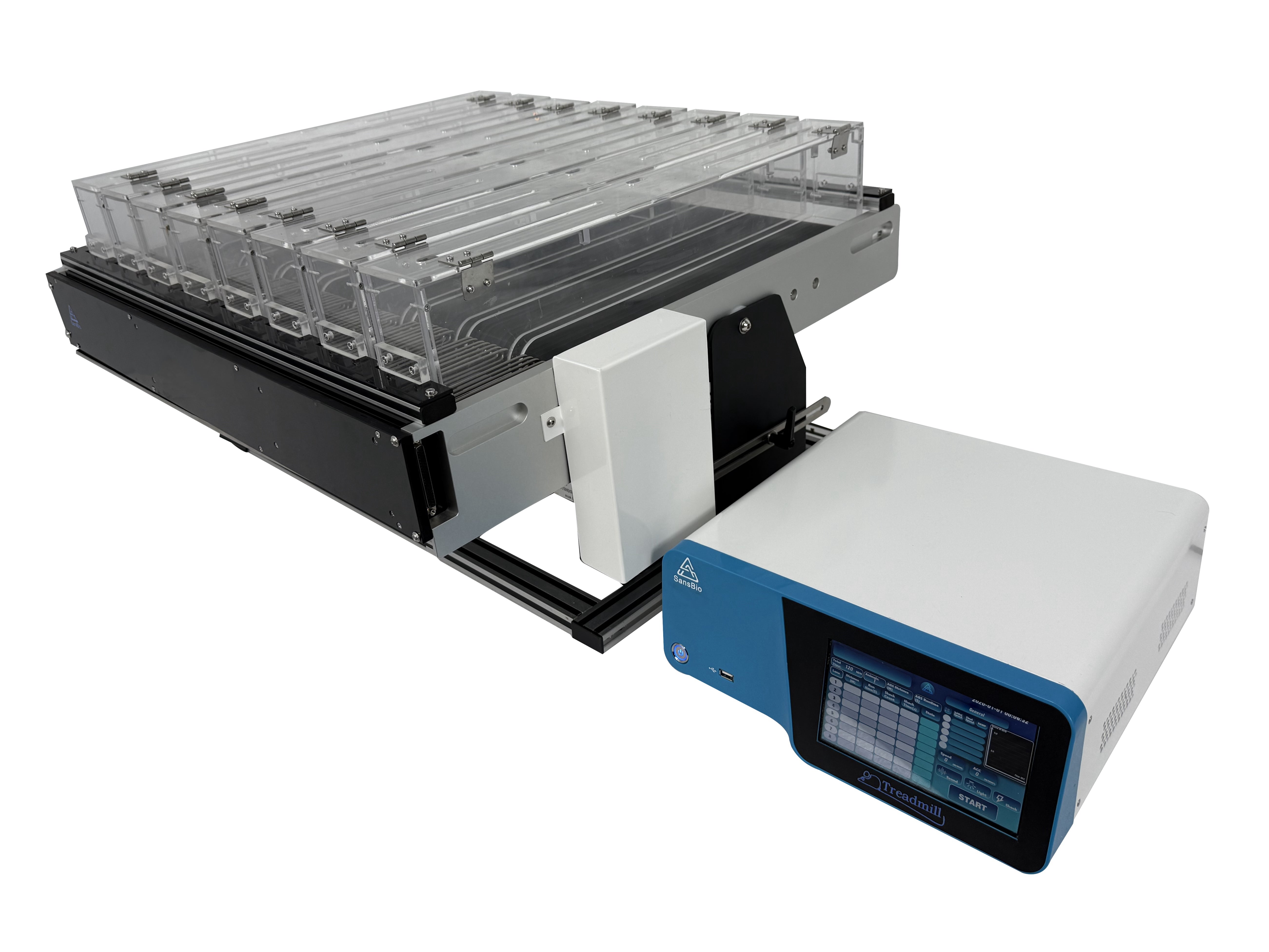
I’ve been involved in setups that use force sensors, infrared sensors and basic telemetry; I’ve seen how a misaligned speed control or a faulty incline motor can shift an entire data set. I want to share what I’ve learned — practical observations, not fluff — because these small problems compound quickly. In the next section, I’ll unpack where traditional setups fall short and what hidden pains lab teams quietly endure. Let’s move from the corridor into the workbench.
Digging Deeper: Where traditional systems trip up
At its core, a rat treadmill is supposed to give repeatable, controlled locomotion data. But the reality is messier. rat treadmill systems often rely on legacy speed controllers and simplistic feedback loops that ignore subtle behavioural variance. Technically speaking, measurement drift, poor calibration routines and lag in data acquisition degrade signal quality — and no one notices until analysis time. I’ll break down the main flaws succinctly.
What exactly goes wrong?
First, hardware mismatch: an edge case of a worn belt or an old power converter can change resistance. Second, sensor fidelity: low-grade force sensors and imprecise velocity profiles lead to noisy outputs. Third, software blind spots: many lab suites lack robust telemetry and real-time filtering, so artifacts slip through. Look, it’s simpler than you think: a small change in belt tension or a slight offset in an infrared beam shifts the baseline. Those shifts then ripple into fatigue metrics, VO2 estimations and behavioural scoring.
We’ve also seen workflow friction — calibration routines that take too long, unclear SOPs, and teams relying on manual checks. These hidden pains create inconsistent replicates and frustrate early-career researchers who need dependable results. I’ve had nights re-running trials because of a 0.2 m/s speed mismatch — funny how that works, right? In short, traditional solutions were designed for convenience, not for the precision modern studies demand. The next section looks forward: how new principles can change the game.
Forward-looking principles for next-gen treadmill design
What’s next — and how do we get there? I favour principles that treat the treadmill as part instrument, part sensor network. First, tighter integration: combine high-fidelity force sensors with real-time data acquisition and onboard edge computing nodes to preprocess signals. Second, robust calibration: automated routines that compare velocity profiles against a known standard and adjust incline motor behaviour on the fly. These are not optional luxuries; they prevent hours of wasted experiment time.

Third, modularity: design units so you can swap a power converter or replace a belt without breaking the assay. And fourth, smarter telemetry: biotelemetry and streaming filters that flag anomalies during the run. All these principles reduce variability and free researchers to ask better questions. I’ll illustrate with a quick case — a lab that replaced an old treadmill controller with a calibrated module and saw inter-session variance drop by half within weeks (real results, not marketing). That change improved replicability and morale — and yes, it translated to clearer manuscripts.
What to measure next?
When choosing or upgrading a system, I recommend three evaluation metrics: consistency (inter-session variance), responsiveness (latency from command to belt change) and maintainability (time-to-service for common parts). Use these as your checklist. In my experience, prioritising these metrics yields faster, more reliable science — and less midnight panic when results look off.
I care about practical solutions. We can push for better hardware and clearer SOPs without breaking budgets; small upgrades often unlock big gains. For tools and reliable components, I’ve found dependable options at BPLabLine — they offer modular systems that align with the principles above. We owe it to our teams and animals to make each step count.